
2026
Buying Phones Abroad for Better Prices: When Unlocking Makes an Imported Device Practical
Buy & Sell Cell Phone
The decision to buy phone from another country can be surprisingly tempting. A model may cost less abroad, a particular storage option may be unavailable locally, or another market may offer colors and configurations that never officially reach your country.
Online marketplaces have made these purchases much easier. Unfortunately, they have not eliminated the differences between regional smartphone versions.
An imported phone can be an excellent purchase. It can also become an expensive device that technically works but misses important network features—or cannot use your carrier at all.
The key is understanding three separate questions before buying a phone from another country: Is the device carrier-locked? Is that exact regional version technically compatible? And will the manufacturer or retailer support it in your country?
Why to Buy a Phone From Another Country
Price is the obvious motivation, but it is not the only one.
Smartphone manufacturers frequently create different launch plans for different countries.
As a result, buyers may import devices because they want:
- Lower pricing
- Earlier availability
- More storage
- Exclusive colors
- Dual physical SIM
- A physical SIM tray instead of eSIM-only hardware
- Models not officially distributed locally
Enthusiasts also buy a phone from another country from brands that simply do not sell in their home market.
For many users, the purchase works perfectly.
The problems arise when “same phone” is interpreted too literally.
Two devices carrying the same marketing name can use different model numbers and have meaningful differences underneath.
Case Study: Great Price, Wrong Market
Imagine finding a nearly new flagship for €200 less than local retail.
The seller is reputable. The device looks perfect. Storage is correct, and the color is exactly what you wanted.
After delivery, however, your local SIM produces a carrier restriction message.
You discover that the phone was originally sold through a foreign network and remains locked.
That problem may be solvable if the device meets the relevant unlocking requirements.
Now consider another version of the same story.
The phone is already unlocked. Your SIM works, but 5G does not. Wi-Fi Calling is unavailable, and reception is significantly weaker in rural areas than it was on your previous device.
Here, unlocking is not the answer.
The imported model may lack important radio bands or carrier support.
These scenarios illustrate the most important principle in any international phone purchase: carrier lock status and compatibility are separate issues.
Carrier Lock vs Regional Compatibility: They Aren’t the Same
A carrier lock is a software or network restriction that prevents the device from accepting another carrier under applicable conditions.
Regional compatibility describes whether the actual device can function properly with the intended network and services.
Unlocking may remove the first problem.
It cannot manufacture missing hardware or transform one regional version into another.
For example, an unlocked imported phone might still have limited support for:
- Specific 4G frequencies
- Specific 5G bands
- VoLTE
- Wi-Fi Calling
- Carrier aggregation combinations
- eSIM
- Satellite services
This is why a listing that says “factory unlocked” does not answer every question a buyer should ask.
What Can Differ Between Regional Versions?
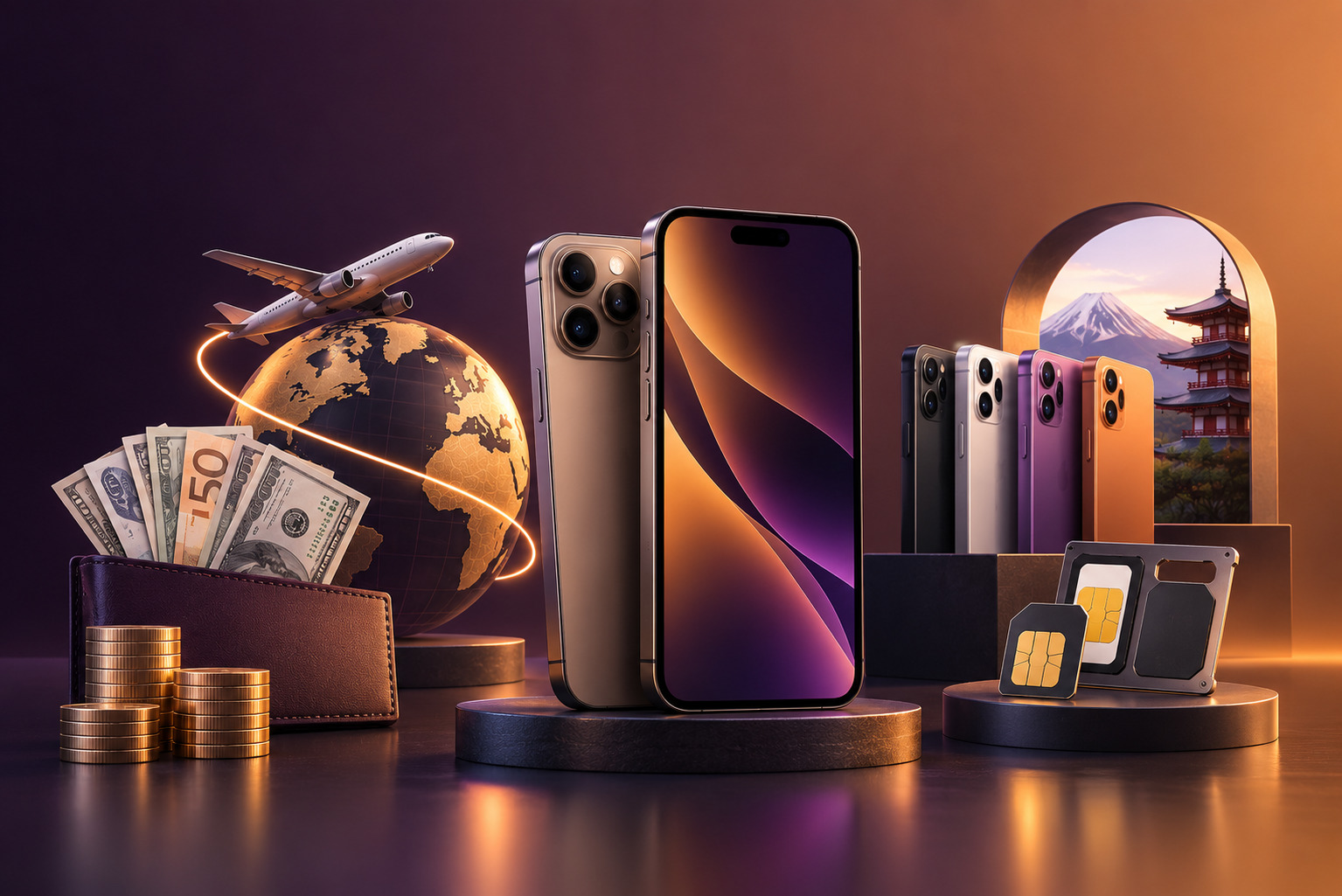
When you buy phone from another country, investigate the exact model number.
Several differences are possible.
Cellular Bands
Radio support is the most obvious concern.
Manufacturers sometimes produce variants optimized for the frequencies used in specific regions.
A phone may still connect abroad but lack one of the low-frequency bands that provides the best rural or indoor coverage.
The result can be a device that appears compatible on paper because “4G works” while delivering a noticeably worse real-world experience.
Software and Features
Some functionality varies because of local regulation, licensing, carrier certification, or manufacturer policy.
Region-specific differences can affect features such as calling services, wallets, recording functions, AI tools, and connectivity options.
Changing the SIM does not necessarily change the market configuration of the device.
SIM Configuration
The physical hardware can differ too.
One market may receive:
- Dual physical SIM
while another receives:
- Physical SIM + eSIM
or:
- eSIM-only configuration
This matters especially when importing phones from the United States or purchasing devices for travel between markets where physical SIM remains common.
Warranty and Repair
A global brand does not always provide a global warranty.
A manufacturer may restrict warranty service to the original country or sales region. Local authorized repair centers may also have difficulty obtaining parts for a variant they do not normally service.
Before saving €150 on the purchase, consider what would happen if the phone developed a hardware problem six months later.
Carrier Configuration
Carriers sometimes maintain lists of supported or certified devices.
Even when the hardware contains the necessary bands, some features can depend on the carrier recognizing and provisioning the model.
This can affect VoLTE, Wi-Fi Calling, visual voicemail or other services.
When Unlocking Solves the Problem—and When It Doesn’t
Unlocking helps when the obstacle is genuinely a carrier restriction.
Suppose the imported phone supports your carrier’s important bands and services but refuses the SIM because it remains locked to the original foreign network.
If the device qualifies for an appropriate unlocking method, removing that restriction can make the import practical.
The situation is different when the hardware itself is incompatible.
Unlocking cannot solve:
- Missing cellular frequencies
- Unsupported eSIM hardware
- Incompatible regional firmware features
- Missing carrier certification
- Warranty limitations
- A blacklisted IMEI
That last point deserves emphasis.
An unlocked phone can still have an IMEI-related restriction. Likewise, a phone with a clean IMEI can still be carrier-locked.
Those are independent checks.
Before importing a carrier-sold phone, confirming both its lock status and regional compatibility can prevent a bargain from becoming an expensive inconvenience.
A useful internal link here would be IMEI Clean vs Blacklisted: What Every Phone Buyer Should Understand.
Checklist Before Buying a Phone From Another Country
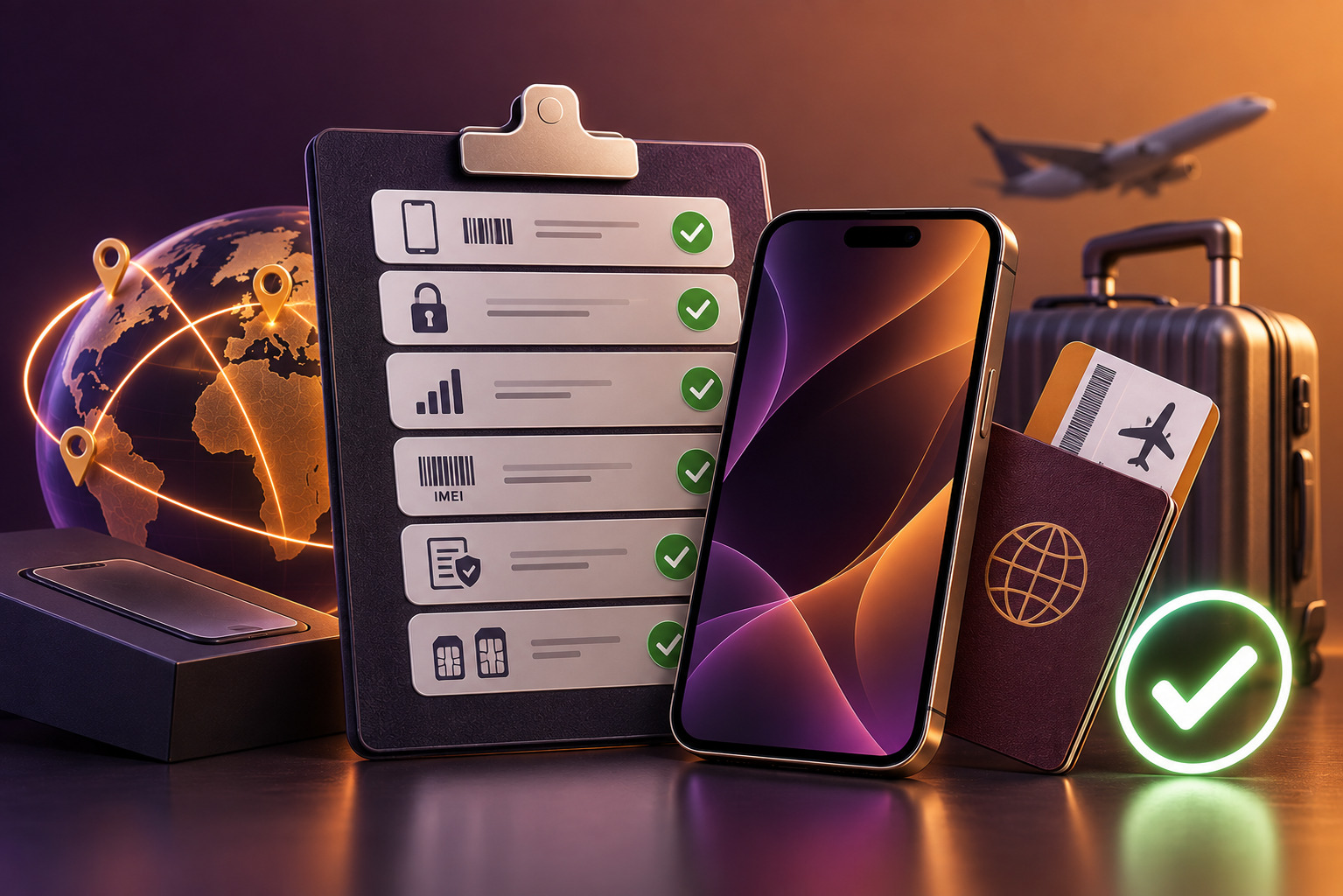
Before sending payment, work through a short verification process.
Confirm the Exact Model Number
Do not rely solely on a name such as “Galaxy S26 Ultra” or “Pixel 11 Pro.”
Ask for the full model identifier.
Then compare that variant with the manufacturer’s official specifications where possible.
Check Carrier Lock Status
If the phone was carrier-sold, determine whether it is already unlocked.
Do not assume that “paid off” and “unlocked” always mean the same thing. Carrier rules vary by country and provider.
If it remains restricted, establish whether it is eligible for unlocking before purchasing.
Check IMEI Status
For a second-hand import, verify that the device is not reported lost, stolen, or subject to another network restriction.
A very low price is not valuable if the phone cannot be reliably activated.
Compare Network Bands
Check the local carrier’s bands against the exact imported model.
Prioritize the frequencies that matter for your actual region rather than simply counting how many bands overlap.
Confirm SIM and eSIM Requirements
Make sure the hardware matches how you intend to use it.
A US eSIM-only model may be inconvenient in a market where your preferred provider still depends heavily on physical SIM.
Investigate Warranty Terms
Ask whether the manufacturer will honor warranty service in your country.
If not, factor that risk into the price.
The Cheapest Listing Isn’t Necessarily the Cheapest Phone
Importing creates additional costs that can erase the apparent saving.
Depending on the country, these may include:
- Shipping
- VAT
- Customs duties
- Currency conversion
- Return shipping
- Unlocking
- Non-covered repairs
A €900 device bought locally and a €750 import are not automatically separated by €150 in real cost.
Calculate the final landed price.
Then compare the warranty, compatibility and flexibility of both options.
Imported Phones and Resale Value
Regional versions can also affect resale.
A device that is unusual in your market may appeal to enthusiasts but confuse mainstream buyers.
An unlocked international version with strong local compatibility can still sell well. A carrier-restricted import with unusual SIM configuration will have a smaller audience.
Keep proof of purchase, model information, and any legitimate unlocking documentation available.
Transparency makes an imported device easier to sell later.
Buying From International Marketplaces
Marketplace reputation matters, but seller-specific information matters more.
Look for:
- Clear photos of the actual device
- Exact model number
- IMEI availability through an appropriate verification process
- Lock-status disclosure
- Return protection
- Seller history
Avoid interpreting vague terms such as “international version” as a guarantee.
The phrase can mean different things depending on the seller.
Ask exactly which market and model number the device comes from.
Conclusion: Import for Value, Not Surprises
It can absolutely make sense to buy phone from another country.
Global commerce gives consumers access to better pricing, unusual configurations and devices they otherwise could not purchase locally.
But the safest import is an informed one.
Confirm the model number, cellular bands, SIM configuration, warranty, IMEI status, and carrier restrictions before buying. Most importantly, remember that an unlocked phone and a compatible phone are not automatically the same thing.
When the device is technically suitable and the only remaining obstacle is an eligible network restriction, professional unlocking can make an international purchase far more practical.
When a legitimate carrier restriction is the obstacle, UnlockBase.com provides professional unlocking solutions for supported devices and networks worldwide.
All products, and company names, logos, and service marks (collectively the "Trademarks") displayed are registered® and/or unregistered trademarks™ of their respective owners. The authors of this web site are not sponsored by or affiliated with any of the third-party trade mark or third-party registered trade mark owners, and make no representations about them, their owners, their products or services.


Comments are closed.