2026
When using a professional unlocking service, it is reasonable to ask what phone unlocking personal information is actually required. Unlocking a device should involve enough information to identify the phone and process the request, but it should not require unlimited access to your private accounts or sensitive credentials.
This distinction matters because users often assume that any information requested by a service must be necessary. In reality, legitimate unlocking usually depends on a relatively small set of technical details, while passwords and financial credentials are generally unrelated to the process.
Understanding what a trustworthy provider needs—and what it does not—can help users protect their privacy while still completing an unlock successfully.
Why Unlocking Requires Device Information—but Not Unlimited Access
Phone unlocking is a technical process tied to the device, its carrier, and its network status.
That means a service may need identifying details about the phone itself. These details help match the correct service to the correct device and prevent errors.
However, unlocking typically does not require broad access to personal accounts.
A professional provider should be able to explain why each requested detail is needed. If that explanation is unclear, users should pause before submitting sensitive information.
The goal of safe phone unlocking is not only to complete the unlock, but also to minimize unnecessary data exposure.
Information Commonly Required for a Legitimate Unlock
The exact requirements vary by device and carrier, but most legitimate services ask for a predictable set of details.
Device Model
The exact phone model is important because unlocking methods can differ between devices.
For example, two phones from the same manufacturer may use different unlocking procedures if they were released for different regions or carriers.
Providing the correct model reduces the risk of ordering the wrong service.
IMEI
The IMEI, or International Mobile Equipment Identity, is one of the most commonly requested details.
It acts as a unique identifier for the device and allows the unlocking service to check the phone against carrier or manufacturer systems.
Because the IMEI identifies the device rather than the user, it is usually a normal part of the process.
That said, IMEI privacy still matters. Users should share the number only with reputable services and avoid posting it publicly.
Carrier
Unlocking depends heavily on the original carrier.
A phone locked to one network may require a different process from the same model locked to another.
This is why legitimate services usually ask which carrier originally sold or locked the device.
Country or Network Information
Some services also require the country of purchase or the regional network.
This matters because carriers can use different systems or policies across markets.
These details are practical and directly related to the unlock.
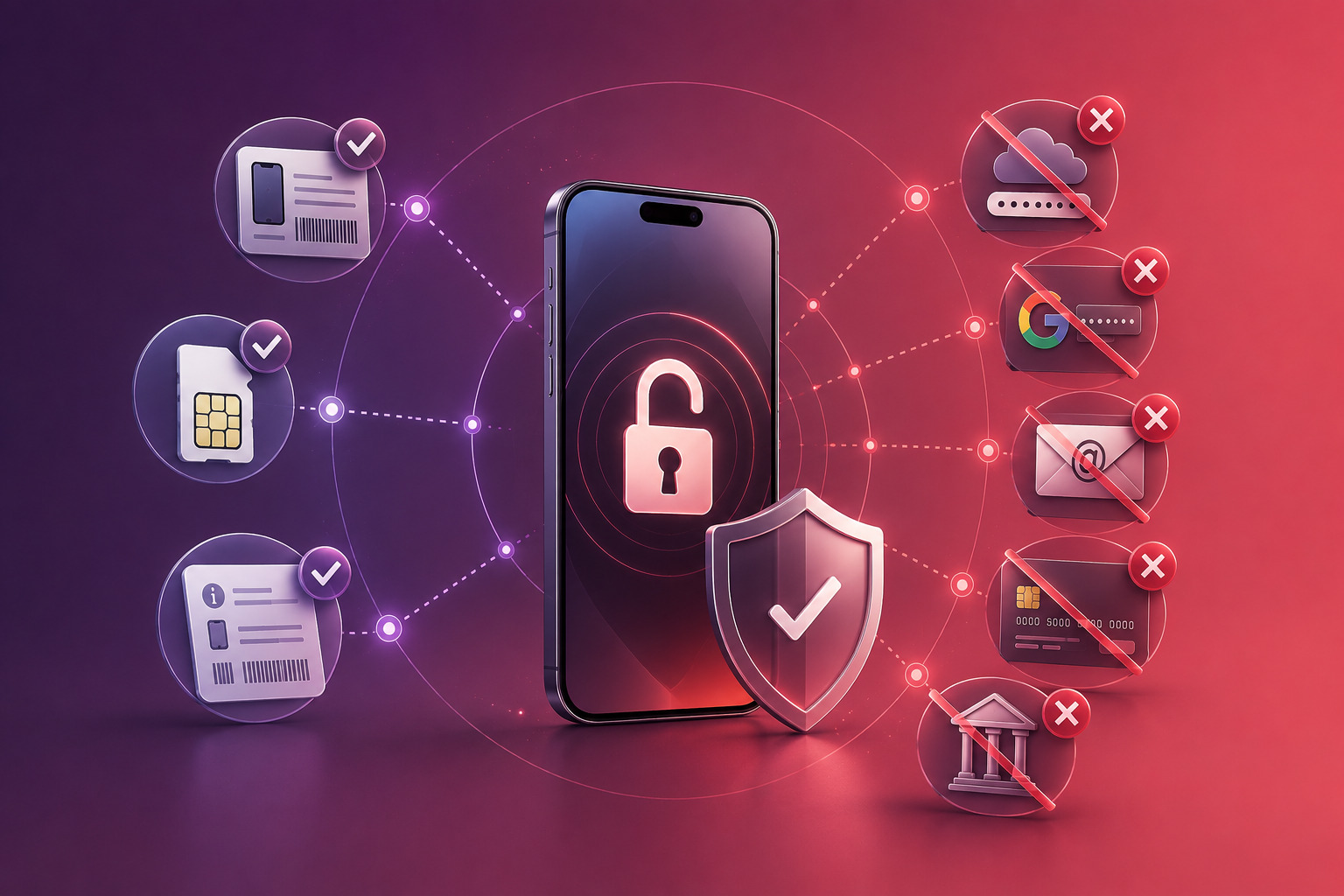
Sensitive Information You Should Treat With Caution
A legitimate unlocking service should not require access to unrelated personal accounts.
Certain requests deserve particular caution.
Account Passwords
Your account passwords are generally not necessary for carrier unlocking.
If a service asks for a password, it should clearly explain why. In most cases, an unlocking service password request should be treated with caution.
Apple ID Credentials
Carrier unlocking does not normally require your Apple ID password.
Apple ID credentials control personal data, purchases, backups, photos, and device security features. They are highly sensitive and should not be shared unless you are working directly within Apple’s own secure account systems.
Google Account Credentials
The same principle applies to Google account passwords.
Unlocking a carrier restriction does not usually require access to Gmail, Google Drive, photos, contacts, or other account data.
Banking or Payment Credentials
A service may need payment information to process an order, but it should never ask for unrelated banking passwords, PINs, or online banking credentials.
Payment should happen through a normal secure checkout process.
Unnecessary Personal Documents
In some cases, identity verification may be required by a carrier or specific regulatory process. However, a provider should explain why any personal document is needed.
Uploading identification without a clear reason creates unnecessary privacy risk.
Why the Requested Information Depends on the Unlock Method
Not every unlock uses the same process.
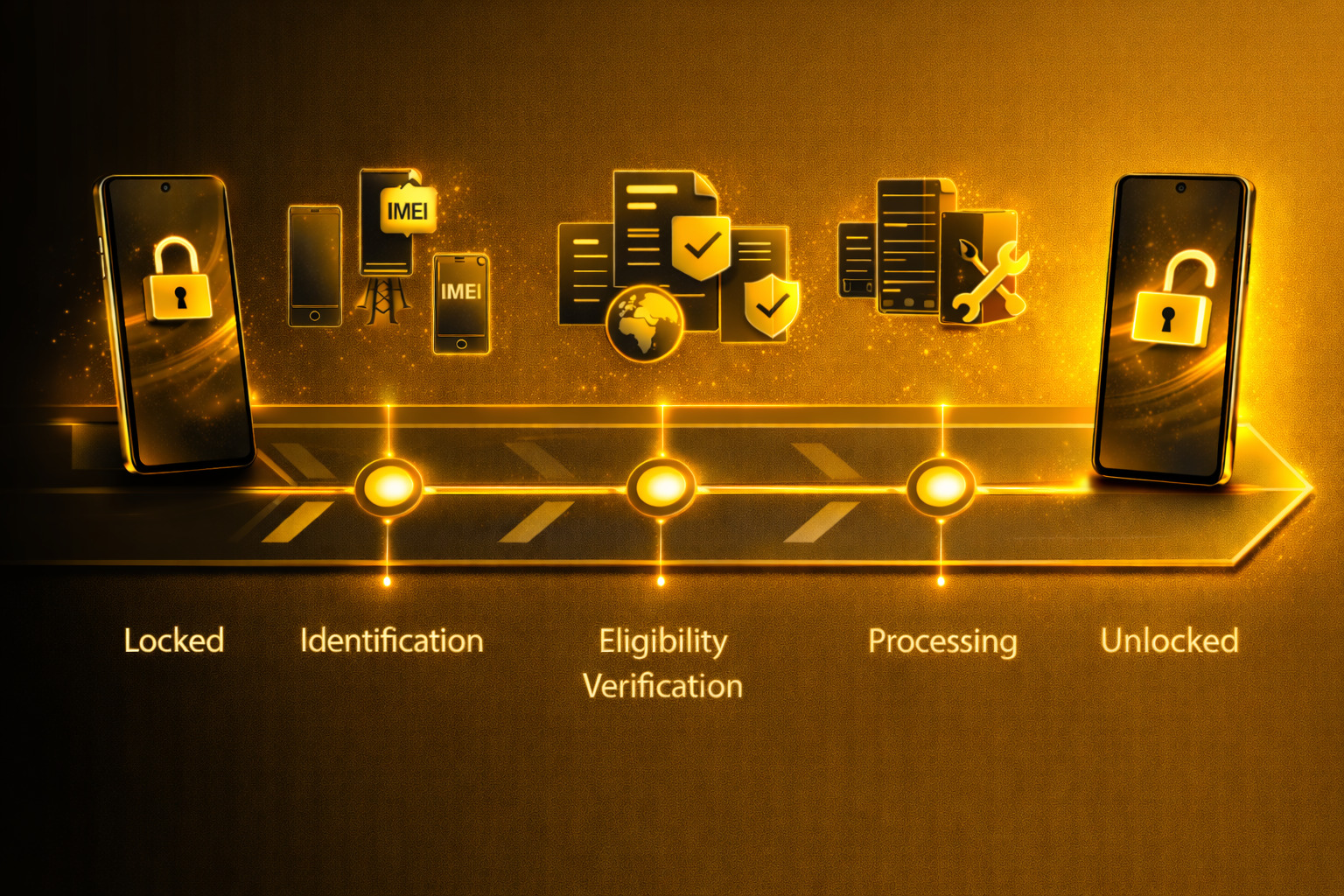
Some rely primarily on IMEI-based carrier database updates. Others may involve device-specific steps or carrier approval.
Because of this, the information required can vary.
An IMEI-based method may only need:
- Device model
- IMEI
- Original carrier
- Country or network details
A more complex process may require additional confirmation, but the provider should always connect the requested information to the actual method.
This is an important part of phone unlock privacy.
The user should understand what the data is for rather than simply being asked to trust the process blindly.
Red Flags When a Service Requests More Than It Needs
One of the easiest ways to evaluate a provider is to compare the information requested with the service being offered.
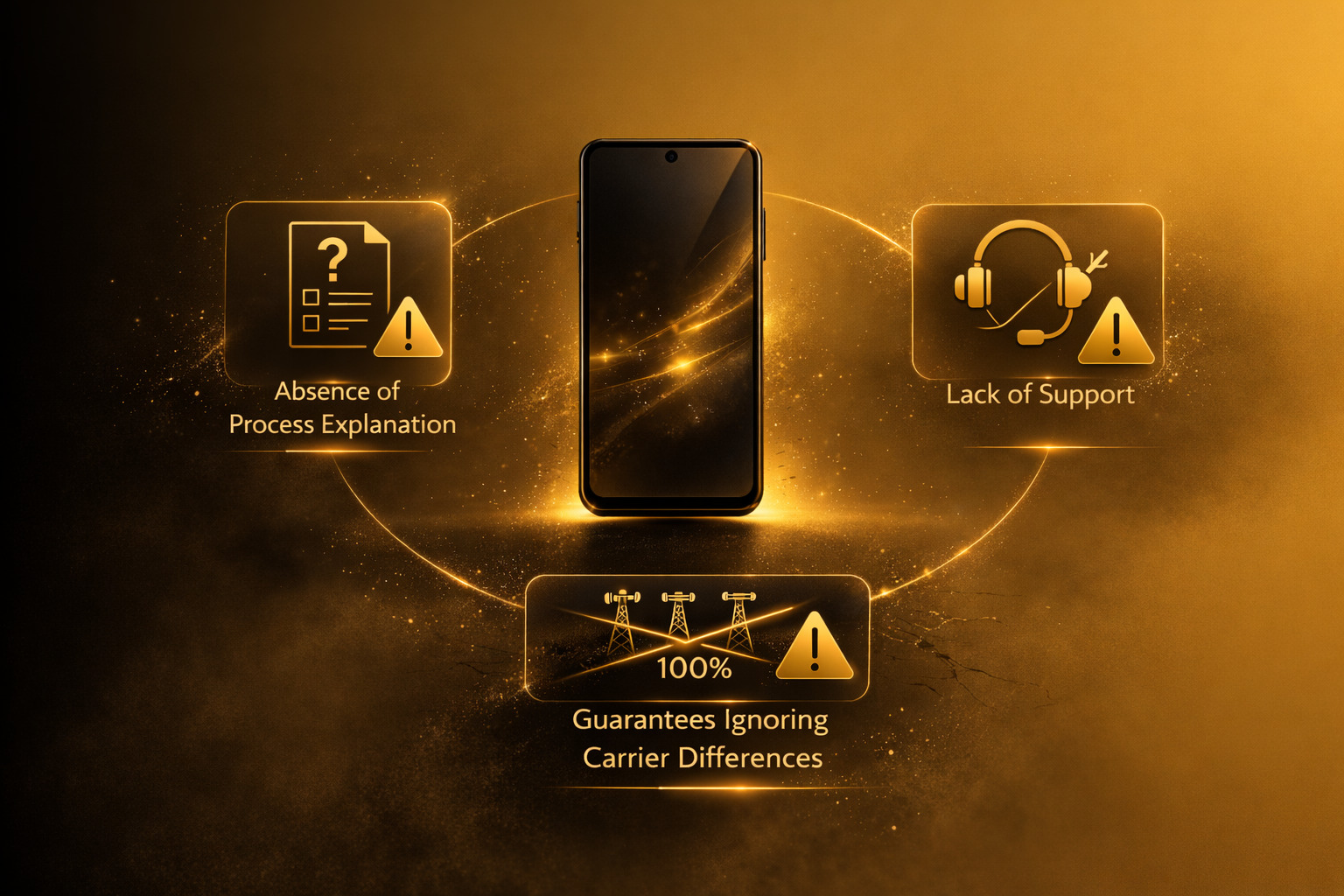
A few warning signs include:
- Asking for Apple ID or Google passwords without a clear reason
- Requesting banking credentials outside a normal payment flow
- Demanding remote account access
- Asking for unrelated personal documents
- Refusing to explain why sensitive information is needed
A legitimate unlocking service should be able to justify each requirement.
When a request feels unrelated to the actual unlock, users should ask questions before proceeding.
Before submitting sensitive information, make sure you understand why it is required and whether it is genuinely relevant to the unlocking method being used.
Transparency Is Part of a Professional Unlocking Service
Good unlock service security starts with transparency.
A professional provider should make the process understandable before the customer submits an order.
That means clearly explaining:
- What information is required
- Why it is required
- How it will be used
- What information is not needed
- What happens after submission
This level of clarity builds trust and reduces uncertainty.
It also helps users distinguish between normal technical requirements and unnecessary access requests.
A service that communicates clearly about its process is easier to evaluate than one that hides behind vague claims.
How to Protect Your Data Before Ordering
Users can take several simple steps to reduce risk.
First, review the provider’s requirements before submitting anything.
Second, avoid reusing passwords or sharing account credentials.
Third, never post your IMEI publicly on forums or social media.
Fourth, use secure payment methods and avoid sending financial information through informal channels.
Finally, ask questions when a request seems unusual.
A reputable provider should be comfortable explaining why information is needed.
Why Privacy Matters More in 2026
Phones now contain far more personal data than they did a few years ago.
Email, banking apps, authentication tools, private photos, work documents, and cloud accounts all live on the same device.
That makes unnecessary access especially risky.
As unlocking services become more common, users should expect stronger transparency standards.
The best providers minimize the amount of phone unlocking personal information they request and keep the process focused on the device rather than the owner’s broader digital life.
Conclusion
Understanding what a phone unlocking service really needs is an important part of protecting your data.
In most cases, legitimate unlocking depends on technical information such as the device model, IMEI, carrier, and region. Sensitive credentials such as Apple ID passwords, Google account passwords, and banking access should not be treated as routine requirements.
By understanding the difference between necessary device details and unrelated personal information, users can make safer decisions and choose providers with greater confidence.
UnlockBase.com focuses on transparent unlocking processes, clearly identifying the device information required for each service so customers know what to expect before ordering.
All products, and company names, logos, and service marks (collectively the "Trademarks") displayed are registered® and/or unregistered trademarks™ of their respective owners. The authors of this web site are not sponsored by or affiliated with any of the third-party trade mark or third-party registered trade mark owners, and make no representations about them, their owners, their products or services.