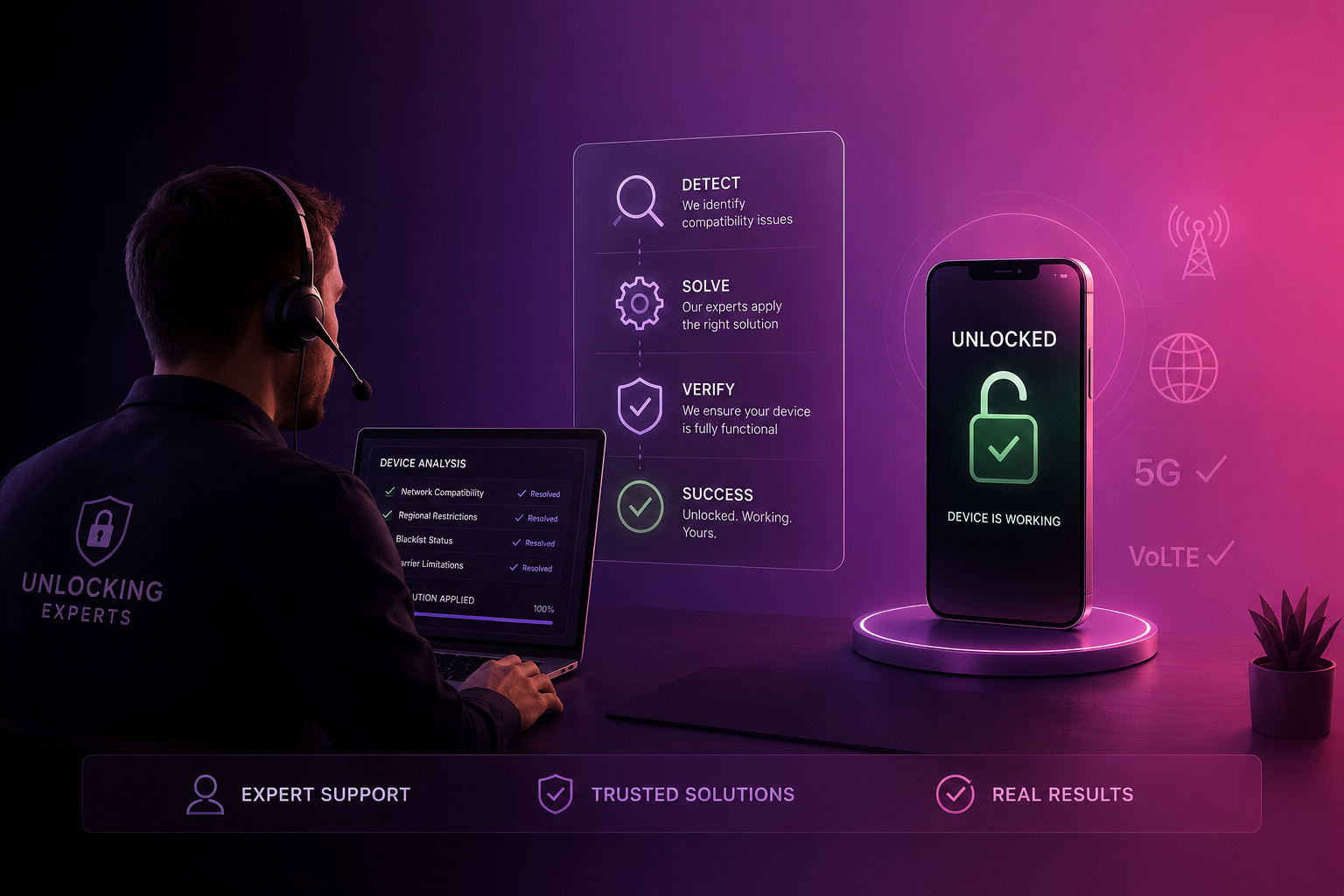
Most people keep backups of important files, photos, and documents, yet relatively few prepare for the device failure that can cause the most immediate disruption: losing access to their main smartphone. An unlocked backup phone can turn that situation from a major inconvenience into a relatively simple SIM or eSIM transfer.
Phones fail at inconvenient times. A screen can break on a business trip, a charging port can suddenly stop working, or a device can disappear during a commute. Even a short repair may leave someone without access to calls, navigation, messaging, banking authentication, and work accounts.
Keeping an older phone therefore makes sense. But simply putting yesterday’s smartphone in a drawer does not automatically make it a useful emergency device. Its carrier status, network compatibility, battery condition, software, and account readiness all matter.
The Problem Nobody Plans For: Suddenly Losing Your Main Phone
A modern phone has become a gateway to far more than voice calls.
It may contain digital boarding passes, maps, two-factor authentication apps, work communications, payment services, family contacts, and access to cloud accounts.
When the main device fails, replacing the hardware is often less difficult than restoring immediate connectivity.
A repair shop may need several days. An insurance replacement may require shipping. Buying a new flagship simply because a screen broke yesterday can also lead to a rushed and expensive decision.
An emergency spare phone provides another option.
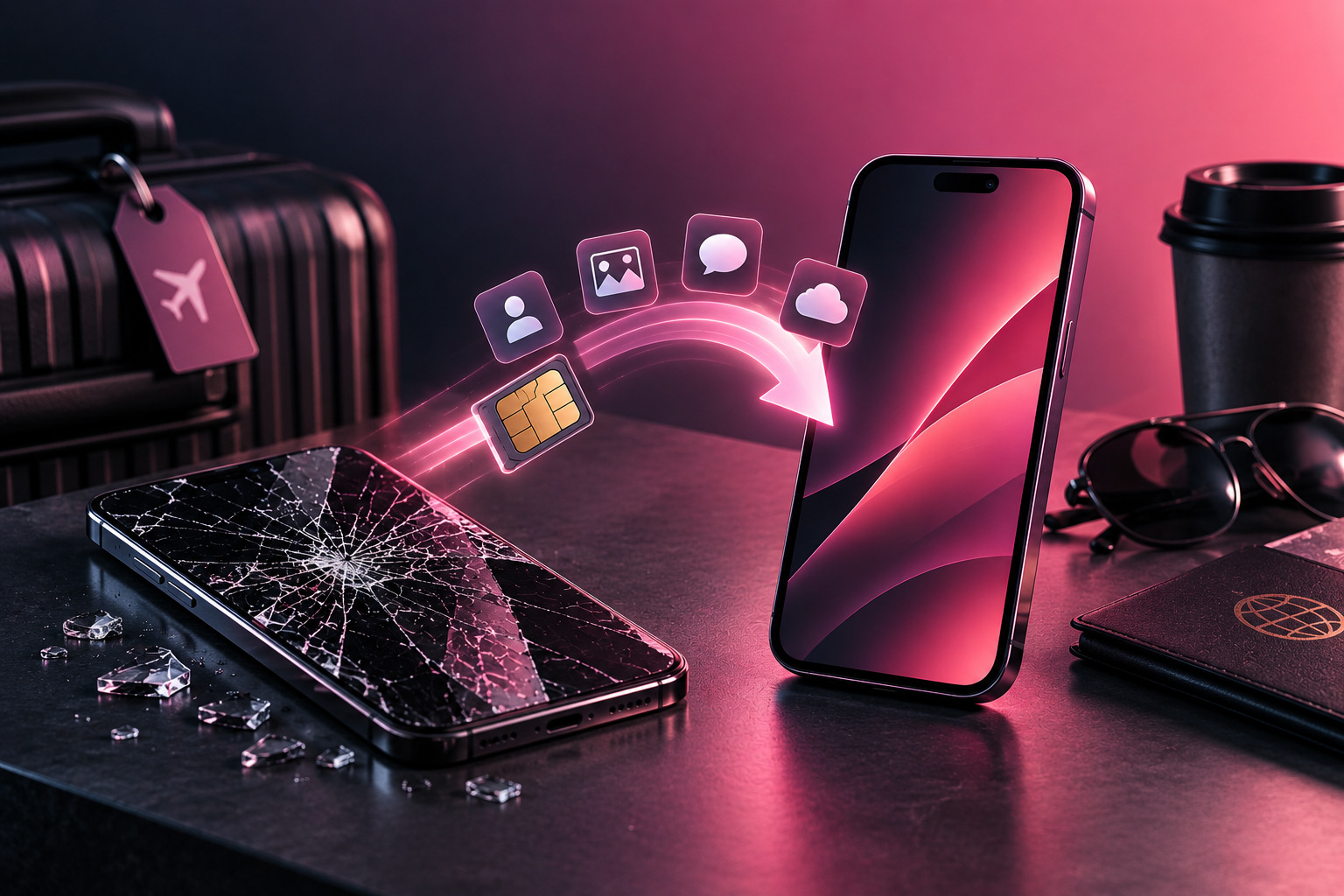
Instead of solving everything immediately, you can move your mobile service to a known working device and continue with the most important daily tasks while deciding what to do with the damaged phone.
That breathing room has real value.
Case Study: Broken Phone, Working SIM, Wrong-Carrier Spare
Imagine a user whose current phone is on Carrier B.
The device falls and the display stops working. Fortunately, there is an older smartphone at home from a previous contract with Carrier A.
The old device still turns on. Its battery works. The screen is intact. Everything appears ready.
The user inserts the Carrier B SIM—and receives a network restriction message.
The backup phone was never unlocked.
At that point, the family technically owns two functional smartphones but has no immediate way to use the available mobile service on the spare.
This is precisely why backup planning should happen before an emergency.
If that same spare had been checked and, where eligible, unlocked in advance, the user could have moved the SIM, signed into essential apps, and restored basic mobile access quickly.
If you keep an older smartphone as a backup, checking its carrier status before an emergency can determine whether it is actually useful when you need it.
Why an Old Locked Phone Isn’t Always a Useful Backup
A carrier-locked phone may still work perfectly—as long as the replacement SIM belongs to the permitted network.
That makes it a less flexible backup.
The problem is especially relevant when families use several providers. One person may use a major carrier, another an MVNO, and a third a business line from a completely different network.
The same applies when switching providers over time. A spare phone that matched your carrier two years ago may no longer match the service you use today.
An unlocked spare device removes one of those limitations.
It does not guarantee universal compatibility. The phone still needs to support the intended carrier’s frequencies and network requirements.
But removing an eligible carrier restriction gives the spare a much better chance of serving whoever needs it next.
What Makes a Good Emergency Phone?
The ideal unlocked backup phone does not need to be a recent flagship.
It needs to be dependable.
Network Compatibility
Start with cellular compatibility.
A phone may be unlocked yet still lack important bands used by your carrier. This is more common with older phones and devices purchased in another region.
Check the exact model rather than relying solely on the commercial name.
If your household uses more than one provider, it is useful to know which networks the device can realistically support.
Battery Condition
A backup phone that has spent two years discharged in a drawer may not be dependable when an emergency finally occurs.
Lithium-ion batteries age even when devices are not actively used.
Charge the phone periodically and check that it can still hold enough power for a full day of basic communication.
If the battery has swollen or shows signs of physical damage, stop using the device.
Updated Software
A spare does not need every new feature, but it should still receive appropriate security updates and support the essential apps you depend on.
Turn it on occasionally and install available system updates.
This is particularly important if the device will be used for email, banking, authentication, or business communication.
Account Readiness
Do not necessarily keep every personal account permanently signed into a phone stored in a drawer.
Instead, make sure you know how to regain access quickly.
For example, confirm that:
Your Apple or Google credentials are current
Two-factor authentication recovery methods work
Essential data is backed up
Password-manager access is available
Important contacts synchronize with your account
The objective is readiness without creating unnecessary security exposure.
Physical SIM vs eSIM for a Backup Phone
The transition toward eSIM adds another consideration.
A physical SIM can often be moved from one compatible unlocked device to another in seconds. eSIM transfer can be equally convenient when both devices and the carrier support the appropriate transfer process, but the exact steps vary.
An older backup smartphone may support only physical SIM.
That does not necessarily make it useless. It simply means you should understand how your current mobile line can be moved if the main phone fails.
If your primary device uses eSIM exclusively, check whether your carrier can quickly issue or transfer a profile to the spare.
Doing that research while everything works is considerably easier than trying to learn the process with a broken phone in your hand.
Preparing a Spare Phone Before You Actually Need It
A backup device should be tested, not assumed.
Once every few months, take it out and check the basics.
First, charge the battery and start the phone.
Then verify:
The device still receives software updates where applicable.
Its carrier lock status matches your intended use.
A compatible SIM or eSIM can be activated.
Calls and mobile data work.
Wi-Fi connects normally.
The charging cable and adapter are available.
Essential applications can still be installed.
You do not need to maintain the spare as a complete clone of your main phone.
The goal is simply to ensure that it can become a temporary replacement phone without creating another technical problem during an already inconvenient situation.
What About an Older 4G Phone?
A 4G device can still make a useful backup in many markets if it supports the carrier’s current voice and LTE requirements.
Age alone is not the deciding factor.
A five-year-old premium phone with good battery health and appropriate network support may be far more useful than a newer imported device with poor compatibility.
However, very old phones can face problems as carriers retire legacy technologies and tighten requirements around VoLTE and network certification.
Check actual carrier compatibility before relying on an older model.
A Spare Phone Can Save More Than Money
The obvious benefit of an unlocked backup phone is avoiding an emergency purchase.
But there are other advantages.
A working spare gives you time to compare repair options. It allows you to wait for a replacement part and it can bridge the gap while an insurance claim is processed.
Unlocked backup phone can also prevent a minor hardware failure from becoming a work or travel emergency.
For families, one flexible device can serve several people at different times rather than sitting permanently associated with the person who originally bought it.
That makes an old smartphone more useful even after it stops being someone’s primary device.
Don’t Forget Security
A backup device should be convenient, but it should not be unsecured.
Use a screen lock. Keep the software reasonably current. Avoid leaving highly sensitive information permanently stored on a device that spends most of its time unused.
If you eventually give away or sell the spare, remove personal accounts correctly and perform the appropriate factory reset.
Remember that factory resetting and carrier unlocking are separate processes. Erasing a phone does not normally remove its carrier restriction.
A useful internal link here would be Unlocking vs Factory Reset: Myths & Best Practices.
Conclusion: Prepare the Backup Before the Emergency
Most people do not need two expensive smartphones in active use.
But keeping one older, compatible device ready can be extremely practical.
The key word is ready.
A phone with a dead battery, outdated software, unknown passwords, or a carrier restriction may offer little help when your primary device suddenly becomes unavailable.
Preparing an unlocked backup phone in advance means checking its network status, battery, software, account access, and compatibility before you actually depend on it.
UnlockBase.com can help turn compatible carrier-restricted devices into more versatile backup phones, giving users another option when their primary device is unavailable.
All products, and company names, logos, and service marks (collectively the "Trademarks") displayed are registered® and/or unregistered
trademarks™ of their respective owners.
The authors of this web site are not sponsored by or affiliated with any of the third-party trade mark or third-party registered trade mark owners,
and make no representations about them, their owners, their products or services.
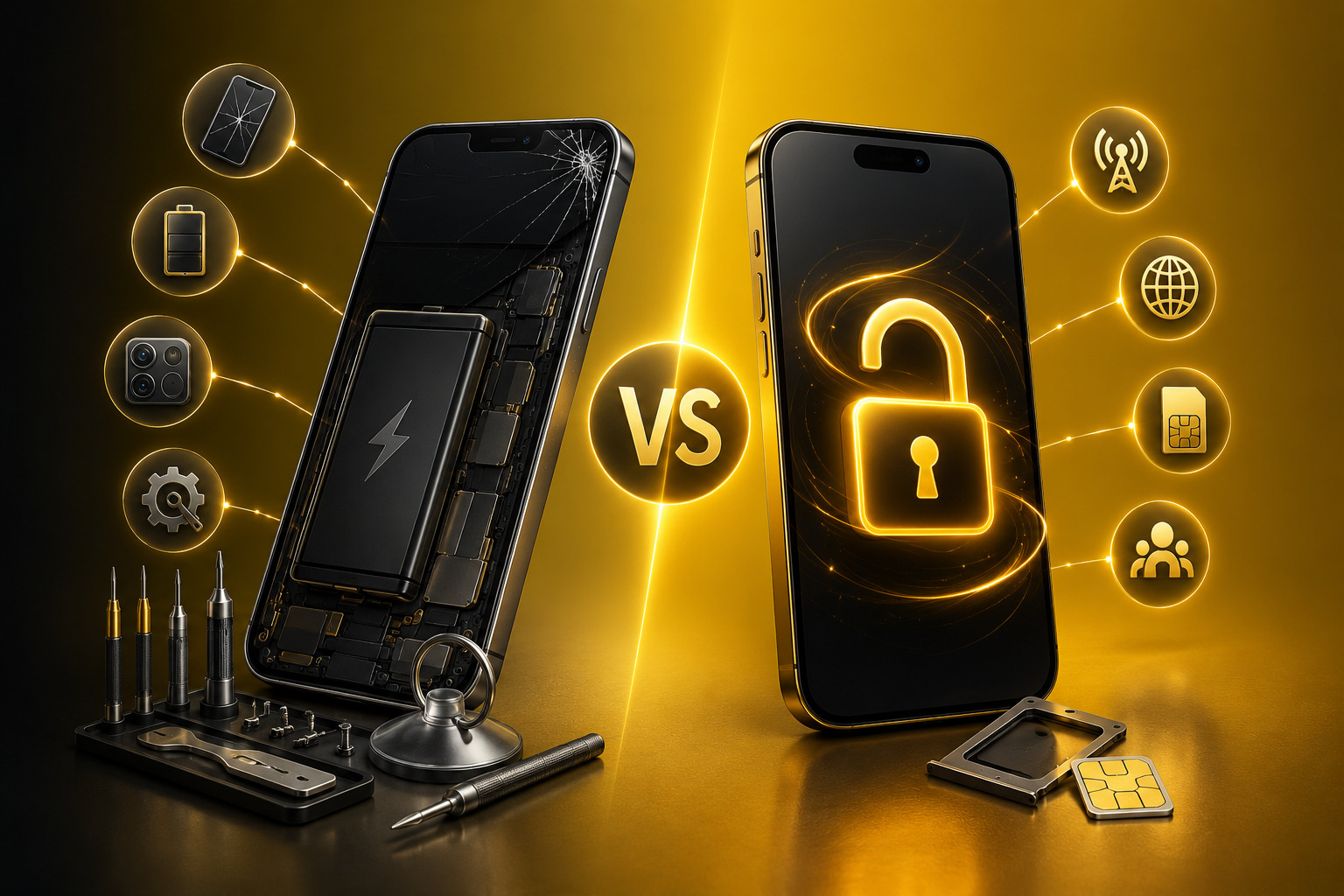
Many smartphone owners encounter problems with their devices at some point, but they are not always sure which type of service they actually need. Understanding phone unlocking vs repair is essential because these services solve completely different problems, even though they are sometimes offered by the same businesses.
For example, a phone that cannot accept another carrier’s SIM card does not necessarily need repairing. Likewise, a device with a cracked screen or a battery that no longer holds a charge cannot be fixed through unlocking.
Knowing the difference helps you save time, avoid unnecessary costs, and choose the right specialist for your particular situation.
Whether you’re switching carriers, buying a second-hand device, or dealing with hardware damage, understanding phone unlocking vs repair will help you make a more informed decision.
Why People Often Confuse Phone Unlocking and Phone Repair
At first glance, unlocking and repair can appear similar because both involve restoring or improving the usability of a smartphone.
In reality, however, they address entirely different aspects of the device.
Phone repair focuses on fixing physical components or resolving technical faults that prevent the device from operating correctly.
Phone unlocking, on the other hand, removes carrier restrictions that limit which mobile networks the device can use.
The confusion often comes from the fact that many repair shops also advertise unlocking services. Customers may therefore assume that unlocking is simply another type of repair.
Another reason is that both services can solve problems that prevent a phone from working as expected.
For example:
A damaged charging port prevents the battery from charging.
A carrier lock prevents another SIM card from connecting.
A broken display prevents normal operation.
A locked network restricts carrier choice.
Although the symptoms affect usability, the underlying causes are completely different.
What Phone Repair Actually Covers
Mobile phone repair deals with physical damage, worn components, or technical malfunctions affecting the hardware or operating system.
Repair technicians diagnose faults, replace damaged parts, or restore normal functionality through technical servicing.
Common repair services include:
Screen replacement
Battery replacement
Charging port repair
Camera repair
Speaker and microphone replacement
Water damage assessment
Button replacement
Software troubleshooting
Motherboard diagnostics
These repairs focus on restoring the device’s ability to function properly.
For example, if a phone no longer powers on because of a faulty battery, replacing the battery resolves the issue.
Similarly, if the screen is cracked or touch input stops working, replacing the display assembly restores usability.
Repair does not change the phone’s carrier status.
A perfectly repaired phone may still remain locked to its original network.
What Phone Unlocking Does
Unlike hardware repair, an unlock phone service focuses on removing network restrictions placed on a device by a mobile carrier.
Many smartphones sold through carriers are configured to accept SIM cards only from that specific provider.
Unlocking removes that limitation, allowing the phone to operate with compatible SIM cards or eSIM profiles from other networks.
People commonly request a carrier unlock service when they want to:
Switch to another carrier
Use local SIM cards while traveling
Increase resale value
Use the phone internationally
Move to a provider offering better pricing or coverage
Importantly, unlocking does not repair damaged hardware.
If the screen is broken, the battery is faulty, or the charging port no longer works, unlocking will not resolve those problems.
Likewise, repairing a phone does not automatically remove carrier restrictions.
The two services address different aspects of the device and often complement one another rather than replace each other.
When You Need One Service, the Other, or Both
Understanding your specific problem makes it much easier to determine the appropriate solution.
If your phone has physical damage or hardware failure, you likely need repair.
Examples include:
Cracked display
Battery drains unusually fast
Phone won’t charge
Camera no longer focuses
Buttons stop responding
If your phone works perfectly but refuses SIM cards from another carrier, unlocking is usually the appropriate service.
Examples include:
“SIM Not Supported” messages
Unable to activate another carrier
Device works only with the original network
Preparing a phone for international travel
Sometimes both services are necessary.
Imagine purchasing a second-hand smartphone with a cracked screen that is also locked to another carrier.
In this situation, replacing the display restores normal operation, while unlocking provides the flexibility to choose your preferred mobile network.
Another example involves refurbishing older devices for resale.
A company may replace worn batteries, repair cosmetic damage, and then unlock the phones before selling them. The repaired hardware improves reliability, while unlocking increases market appeal and usability.
Understanding whether your issue involves hardware, software, or carrier restrictions helps avoid paying for services that do not solve the actual problem.
Understanding whether your issue is related to hardware, software, or carrier restrictions can help you choose the right service and avoid unnecessary costs.
Choosing the Right Provider for Your Needs
Not every service provider specializes in both repairs and unlocking.
Some companies focus primarily on hardware repairs, while others specialize in network unlocking and carrier-related services.
Before choosing a provider, ask yourself a few simple questions.
What is the actual problem?
Does the phone have physical damage, or is it fully functional but limited by carrier restrictions?
Has the device been diagnosed properly?
If you’re uncertain whether the issue is hardware-related, a repair technician can often identify the fault before unnecessary services are performed.
Does the provider clearly explain what their service includes?
Professional providers should explain whether their solution addresses:
Hardware repairs
Software issues
Carrier unlocking
Compatibility verification
IMEI-related checks
Clear communication helps set realistic expectations before work begins.
Can Unlocking Damage Your Phone?
One common misconception is that unlocking somehow harms a smartphone or increases the risk of future problems.
Professional carrier unlocking does not physically modify the device.
Instead, it removes network restrictions using legitimate methods that are appropriate for the specific device and carrier.
Likewise, unlocking does not erase personal data simply because the carrier restriction has been removed.
As with any service, users should choose reputable providers that clearly explain the process and expected outcome.
Professional transparency is an important indicator of quality.
Why Understanding the Difference Matters
The distinction between phone repair vs unlocking becomes increasingly important as smartphones remain in use for longer periods.
Consumers often keep devices for four or five years before upgrading.
During that time, they may replace batteries, repair displays, switch carriers, travel internationally, or sell their phones to new owners.
Each situation requires a different solution.
Understanding which service solves which problem prevents unnecessary expenses while ensuring the device receives the appropriate treatment.
Whether you’re maintaining your current smartphone or preparing it for resale, knowing the difference helps maximize both usability and long-term value.
Conclusion
Understanding phone unlocking vs repair helps eliminate confusion and ensures you choose the right solution for your specific situation. While phone repair focuses on restoring damaged or malfunctioning hardware, phone unlocking removes carrier restrictions and allows greater network flexibility.
In many cases, the two services complement one another. A repaired phone can still benefit from unlocking, while an unlocked phone may still require hardware maintenance over time.
By identifying the root cause of the problem before seeking assistance, users can save time, reduce unnecessary costs, and extend the useful life of their devices.
UnlockBase.com specializes in professional phone unlocking services, helping customers resolve carrier restrictions while preserving device functionality.
All products, and company names, logos, and service marks (collectively the "Trademarks") displayed are registered® and/or unregistered
trademarks™ of their respective owners.
The authors of this web site are not sponsored by or affiliated with any of the third-party trade mark or third-party registered trade mark owners,
and make no representations about them, their owners, their products or services.
The refurbished smartphone market continues to grow in 2026 as consumers look for ways to save money without sacrificing quality. Modern refurbished devices often provide excellent value, especially when compared to buying a brand-new flagship phone. However, before completing any purchase, it’s important to check refurbished phone lock status and verify that the device will work as expected on your preferred network.
Many buyers focus on cosmetic condition, battery health, and storage capacity. While these factors matter, a phone’s network status can be just as important. A device may look flawless and function perfectly over Wi-Fi, yet still face limitations when connecting to a carrier.
Learning how to check refurbished phone lock status before purchasing can help avoid activation issues, unexpected restrictions, and costly mistakes later.
Why Checking Lock Status Matters
A carrier lock restricts a phone to a specific mobile network. Carriers often apply these restrictions when devices are sold through financing plans, promotions, or contract agreements.
For some users, a locked phone may not present an immediate problem. If they plan to remain with the same carrier, the device may work normally.
However, circumstances change.
A buyer may want to:
Switch carriers for a better deal
Use a local SIM while traveling
Activate an eSIM from another provider
Resell the device in the future
In these situations, a carrier lock can become a significant limitation.
This is particularly relevant when purchasing refurbished phones because devices often come from a wide range of sources. Some were originally sold unlocked, while others may still carry network restrictions from previous owners.
Before you buy refurbished phone safely, understanding the device’s lock status is essential.
Step 1: Verify the IMEI
The first and most important step is performing an IMEI check refurbished phone buyers can trust.
Every mobile device has a unique IMEI (International Mobile Equipment Identity) number. This identifier allows carriers and verification services to access important information about the device.
Ask the seller to provide the IMEI before purchasing. Reputable sellers usually make this information available or provide a secure method for verification.
An IMEI check can reveal:
Device model confirmation
Carrier association
Blacklist status
Potential network restrictions
Activation eligibility
This step helps verify that the phone matches the description and does not carry unexpected restrictions.
If a seller refuses to provide the IMEI or avoids questions about device history, consider that a warning sign.
Remember that lock status and blacklist status are different. A phone can have a clean IMEI while still being carrier locked. Likewise, a device may be unlocked but still face other restrictions.
That is why IMEI verification should be the starting point, not the final step.
Step 2: Confirm Carrier Information
After verifying the IMEI, the next step is conducting a proper carrier lock check.
Many refurbished devices originate from major carriers that subsidized or financed the original purchase. Even if the device is no longer in active use, it may still retain network restrictions.
Ask the seller the following questions:
Which carrier originally sold the device?
Has the phone been officially unlocked?
Is there documentation confirming unlock status?
Has the phone been tested with other carriers?
The more transparent the seller is, the more confidence you can have in the purchase.
Some manufacturers also provide clues within device settings.
For example, on many iPhones you can navigate to:
Settings → General → About → Carrier Lock
If the device displays “No SIM Restrictions,” it is generally unlocked.
Many Android devices provide similar information through network or SIM management settings, although the exact menus vary by manufacturer.
If the seller has physical access to the device, request screenshots whenever possible.
Step 3: Test Network Compatibility
Even after you check refurbished phone lock status, compatibility remains an important consideration.
A phone that is unlocked may still experience limitations if it lacks support for your carrier’s network bands or technologies.
This issue becomes increasingly important in 2026 as carriers continue expanding 5G deployments, VoLTE requirements, and eSIM support.
Before buying, verify:
Supported network bands
4G and 5G compatibility
VoLTE support
eSIM capability
Regional model differences
For example, a device originally intended for one region may not fully support the frequencies used by carriers in another country.
This is particularly relevant when buying through international marketplaces.
A simple compatibility check can help ensure the phone delivers the performance you expect after activation.
Taking a few minutes to verify lock status before purchase can prevent significant frustration later.
Common Red Flags to Watch For
Most refurbished phone sellers operate honestly and provide clear information. However, buyers should remain alert for warning signs that may indicate potential issues.
One common red flag is incomplete device information.
If a listing provides extensive details about appearance but avoids discussing network status, ask follow-up questions before proceeding.
Other warning signs include:
Refusal to provide IMEI information
Unclear carrier history
Claims that lock status is “unknown”
Extremely low pricing compared to market averages
Missing activation guarantees
Another concern involves vague descriptions.
Terms such as “carrier ready,” “network compatible,” or “tested working” do not necessarily mean the phone is unlocked.
Whenever possible, seek direct confirmation rather than relying on assumptions.
A strong used phone buying guide always emphasizes verification over guesswork.
Understanding the Difference Between Locked and Unlocked
Many buyers misunderstand what unlocking actually means.
An unlocked phone allows the use of SIM cards or eSIM profiles from multiple compatible carriers. This flexibility becomes valuable when changing providers, traveling internationally, or reselling the device.
A locked phone remains restricted to a specific carrier until the lock is removed.
The practical differences can include:
More carrier options
Easier international travel
Improved resale appeal
Greater long-term flexibility
For buyers planning to keep a device for several years, unlocking can become an important factor in long-term usability.
This is one reason why many experienced buyers prioritize an unlocked device when shopping for refurbished phones.
Why Compatibility Matters as Much as Lock Status
Many consumers focus exclusively on carrier locks and overlook broader compatibility concerns.
However, a phone that is technically unlocked may still deliver a poor experience if it lacks support for the carrier’s required technologies.
Before completing any purchase, combine your phone compatibility check with lock-status verification.
The strongest buying decisions usually involve confirming:
Clean IMEI status
Unlocked network status
Carrier compatibility
Regional suitability
Software support availability
Together, these checks provide a much more complete picture of the device’s real-world usability.
Tips for Buying Refurbished Phones Safely
A few simple habits can significantly reduce risk when purchasing refurbished devices.
Consider these best practices:
Buy from reputable marketplaces or certified refurbishers
Request IMEI verification before purchase
Confirm lock status in writing when possible
Review return and refund policies
Verify compatibility with your intended carrier
These steps do not require advanced technical knowledge. They simply help ensure that the device you receive matches your expectations.
The goal is not only to save money but also to avoid unexpected limitations after activation.
Conclusion
Refurbished smartphones offer excellent value, but buyers should never overlook network status. Taking time to check refurbished phone lock status before purchase can help prevent activation issues, compatibility problems, and future frustration.
Start by verifying the IMEI, confirming carrier information, and checking network compatibility. Combined, these steps provide a reliable picture of whether a device will work as expected.
As the refurbished market continues to expand in 2026, informed buyers enjoy the best results. A few minutes of verification today can save significant time and expense later.
UnlockBase.com provides tools and services that help users make informed decisions about device compatibility and unlocking.
All products, and company names, logos, and service marks (collectively the "Trademarks") displayed are registered® and/or unregistered
trademarks™ of their respective owners.
The authors of this web site are not sponsored by or affiliated with any of the third-party trade mark or third-party registered trade mark owners,
and make no representations about them, their owners, their products or services.
The conversation around smartphones is changing. Instead of upgrading every year, more consumers are choosing to keep their devices longer. In this environment, phone longevity unlocking has become an increasingly important topic for users who want to maximize the value of their devices.
Modern smartphones are more capable than ever. Even devices that are several years old can still handle everyday tasks, support modern apps, and deliver strong performance. As a result, many users no longer see a compelling reason to replace their phones as frequently as they once did.
However, long-term ownership requires more than good hardware. A device must remain flexible enough to adapt to changing carriers, travel needs, and connectivity requirements. This is where unlocking can play an important role.
Understanding how phone longevity unlocking contributes to long-term usability helps consumers make smarter decisions about their devices and avoid unnecessary upgrades.
Why Smartphone Replacement Cycles Are Getting Longer
A decade ago, smartphone technology evolved rapidly. Each generation brought dramatic improvements in cameras, displays, processing power, and battery life.
Today, progress continues, but the differences between generations have become more incremental.
Many consumers find that devices purchased three or four years ago still perform well for:
Messaging and communication
Video streaming
Social media
Mobile banking
Navigation
Photography
Software support has also improved. Manufacturers now provide updates for longer periods, helping users safely keep phone longer without sacrificing security.
Economic factors contribute as well. Premium smartphones have become more expensive, encouraging consumers to maximize the lifespan of existing devices rather than replace them frequently.
This shift has created a growing focus on extending the overall device lifecycle rather than constantly pursuing the newest model.
Common Reasons People Replace Phones Too Early
Despite improvements in device longevity, many phones are still replaced before their useful life is truly over.
In some cases, hardware problems justify an upgrade. Battery degradation, physical damage, or unsupported software can eventually make replacement necessary.
However, many users replace devices for reasons that are not directly related to hardware performance.
One common issue is carrier flexibility.
A phone may function perfectly, but if it cannot easily move between networks, users sometimes feel forced to replace it when changing providers or traveling internationally.
Other factors include:
Carrier restrictions
Limited SIM or eSIM flexibility
Regional compatibility concerns
Perceived lack of future usability
These issues often create the impression that a device has reached the end of its life when, in reality, it still has years of useful service remaining.
The goal of phone longevity unlocking is not simply to remove restrictions. It is to help ensure that a capable device remains useful across changing circumstances.
Case Study: Extending a Device’s Useful Life Through Carrier Flexibility
Consider a user who purchased a flagship smartphone three years ago through a carrier financing program.
The device still performs well. The battery remains healthy, the camera produces excellent photos, and software updates continue to arrive regularly.
However, the user wants to switch to a more affordable provider.
If the device remains tied to a specific carrier, the transition may become complicated. Instead of switching networks, the user might consider purchasing an entirely new phone.
Now consider the same situation with an unlocked device.
The user can move to a different carrier, activate a new SIM or eSIM profile, and continue using the same phone.
The hardware remains unchanged. The difference lies entirely in flexibility.
This example demonstrates how phone longevity unlocking can help users extract additional years of value from existing devices.
A phone that works across multiple networks often remains relevant longer than one restricted to a single provider.
Before replacing a phone, it’s worth exploring whether greater network flexibility could help extend its useful life.
Economic and Environmental Benefits
The benefits of keeping devices longer extend beyond individual convenience.
Lower Ownership Costs
One of the clearest advantages is financial.
When users extend phone lifespan, they reduce the frequency of expensive upgrades.
The savings can be substantial over time. Delaying a replacement by even one or two years often represents hundreds of dollars in avoided costs.
Additionally, unlocked devices frequently retain stronger resale value because they appeal to a wider range of buyers.
The combination of reduced upgrade frequency and improved resale potential makes long-term ownership financially attractive.
Reduced Electronic Waste
Longer device usage also supports sustainability goals.
Every smartphone requires resources to manufacture, transport, and distribute. Extending the device lifecycle reduces demand for premature replacements.
While recycling remains important, keeping a functional device in active use often represents the most environmentally responsible option.
Consumers increasingly recognize that maximizing the usefulness of existing devices can have a positive impact on both their finances and the environment.
Planning for Long-Term Device Ownership
Successful long-term ownership requires some planning.
Rather than focusing solely on initial purchase price, users should consider how adaptable a device will remain over time.
Several factors contribute to long-term usability.
Software Support
Choose devices from manufacturers with strong update policies.
Extended software support helps maintain security and compatibility for years after purchase.
Battery Health
Battery performance naturally declines over time.
Replacing a battery can often restore a device’s usefulness without requiring a full upgrade.
Carrier Flexibility
Carrier flexibility plays a major role in long term phone ownership.
Users may change providers, move to new regions, or adopt eSIM-based connectivity solutions.
A device that can adapt to those changes remains valuable for longer.
International Compatibility
Many users travel more frequently than they did in previous years.
Ensuring compatibility with different carriers and regions can significantly improve long-term usability.
Why Unlocked Devices Often Age Better
The concept of unlocked phone benefits extends beyond convenience.
Unlocked devices are better positioned to adapt to changing market conditions.
As carriers evolve, pricing changes, and new connectivity options emerge, users retain greater control over how they use their phones.
This flexibility reduces the likelihood that network restrictions will prematurely limit a device’s usefulness.
In practical terms, unlocking can help separate the lifespan of the device from the policies of a particular carrier.
That distinction becomes increasingly valuable as smartphone replacement cycles continue to lengthen.
The Future of Device Longevity
Industry trends suggest that long-term ownership will continue growing in popularity.
Consumers are becoming more conscious of value, sustainability, and flexibility. At the same time, smartphone hardware continues to mature.
These factors support a future where devices remain useful for longer periods.
As a result, phone longevity unlocking will likely become an increasingly relevant consideration for users seeking to maximize the return on their technology investments.
Rather than asking how quickly a phone can be replaced, more consumers are asking how long it can continue serving their needs effectively.
Conclusion
The trend toward longer smartphone ownership is reshaping the mobile industry. Modern devices remain capable for years, making it increasingly practical to delay upgrades and maximize value.
Phone longevity unlocking supports this shift by helping devices remain flexible, adaptable, and useful across changing networks and circumstances. By reducing unnecessary limitations, unlocking can help extend a phone’s practical lifespan and improve the overall ownership experience.
For consumers focused on value, sustainability, and long-term usability, flexibility is becoming just as important as hardware performance.
UnlockBase.com helps users get more value from their devices by supporting long-term usability and network flexibility.
All products, and company names, logos, and service marks (collectively the "Trademarks") displayed are registered® and/or unregistered
trademarks™ of their respective owners.
The authors of this web site are not sponsored by or affiliated with any of the third-party trade mark or third-party registered trade mark owners,
and make no representations about them, their owners, their products or services.
It can be frustrating to discover a phone unlocked but not working as expected. Many users assume that once a device is unlocked, it should function seamlessly across any carrier. In reality, unlocking is only one part of the equation.
In 2026, mobile networks have become more complex, and compatibility depends on several factors beyond lock status. A phone may be technically unlocked, yet still fail to connect properly, show no signal, or lack key features.
Understanding why this happens helps users avoid confusion and make better decisions when switching carriers or buying devices.
When “Unlocked” Doesn’t Mean Fully Usable
The term “unlocked” often creates misunderstandings. Users typically interpret it as complete freedom to use the device on any network.
However, unlocking simply removes the restriction that ties a phone to a specific carrier. It does not guarantee full compatibility with all networks.
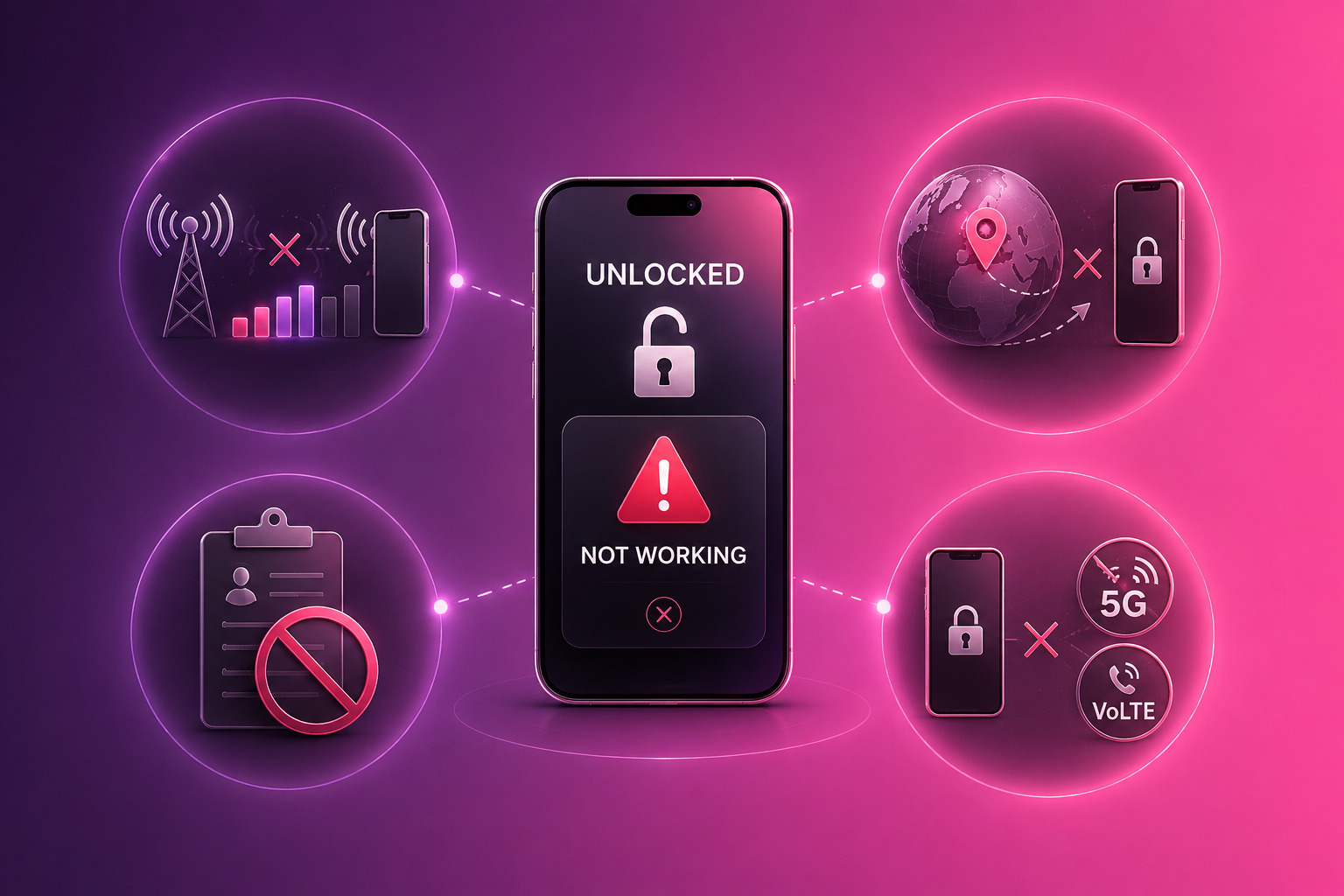
A phone unlocked but not working situation usually results from differences between unlock status and network compatibility. These include hardware limitations, regional configurations, and carrier-specific requirements.
Recognizing this distinction is essential, especially as global connectivity becomes more important.
Hidden Limitations That Affect Phones
Even when a phone is unlocked, several hidden factors can prevent it from working correctly.
Network Band Compatibility Issues
One of the most common causes of a phone unlocked no signal issue involves network bands.
Different carriers use different frequency bands. If a phone does not support the required bands, it may connect partially—or not at all.
For example, a device designed for one region may lack support for certain 4G or 5G frequencies used elsewhere. This leads to weak signal, slow data, or complete disconnection.
Regional Firmware Restrictions
Some devices include region-specific firmware that affects how they operate.
These restrictions can influence:
Network registration behavior
Feature availability
Carrier-specific settings
Even if the device is unlocked, firmware differences can limit functionality when used outside its intended market.
Carrier-Specific Limitations (VoLTE, 5G, etc.)
Modern networks rely on advanced technologies such as VoLTE and 5G. These features require compatibility between the device and the carrier.
A phone not working different carrier situation may occur when:
VoLTE is not supported on the new network
5G bands differ between regions
Carrier certification is missing
In such cases, the phone may still connect but lack essential features like voice calls or high-speed data.
Blacklist / IMEI-Related Issues
IMEI status plays a critical role in device usability.
If a phone is reported lost, stolen, or associated with unpaid balances, carriers may block it—even if it is unlocked.
These IMEI problems phone issues can prevent network access entirely, leading users to believe the device is malfunctioning. If a device appears unlocked but still doesn’t function as expected, checking both its compatibility and configuration can help identify the root cause.
Real-World Scenarios
Understanding how these limitations appear in practice helps clarify the issue.
Switching Carriers in the Same Country
A user switches from one carrier to another within the same country. The phone is unlocked, but after inserting the new SIM, signal quality drops and certain features stop working.
The issue may involve:
Missing network band support
Lack of VoLTE compatibility
Carrier-specific configuration differences
The phone works—but not fully.
Using a Phone Internationally
Another user travels abroad and attempts to use a local SIM or eSIM plan. The phone is unlocked, yet it fails to connect properly.
In this case, the problem may involve:
Regional firmware restrictions
Unsupported frequency bands
Limited carrier compatibility
These scenarios show that a phone unlocked but not working does not always indicate a fault—it often reflects compatibility limitations.
How to Avoid These Problems
Avoiding compatibility issues starts with proper preparation.
Before buying or switching carriers, users should verify several key factors.
First, check network band support. Most manufacturers publish this information, allowing users to confirm compatibility with specific carriers.
Second, perform an IMEI check. This step ensures the device is not blacklisted or restricted.
Third, confirm carrier support for key features such as VoLTE and eSIM. These elements affect everyday usability more than basic connectivity.
Understanding the difference between unlocking and full compatibility helps prevent unexpected issues.
What a Reliable Unlocking Process Should Ensure
A professional unlocking service focuses on more than just removing carrier restrictions. It also provides clarity about what unlocking can and cannot guarantee.
A reliable process includes:
Transparent explanation of the unlocking method
Verification of device and carrier compatibility
Clear communication about limitations
This approach supports unlocking transparency, helping users make informed decisions.
It also reinforces unlock reliability, ensuring that the device performs as expected within its capabilities.
Why These Issues Matter More in 2026
As networks evolve, compatibility becomes more complex. eSIM adoption, regional configurations, and advanced network technologies increase the number of variables affecting device performance.
In this environment, simply unlocking a phone is no longer enough. Users must consider the full picture, including hardware support and network requirements.
Understanding these factors reduces frustration and improves overall device experience.
Conclusion: Unlocking Is Just One Part of the Equation
A phone unlocked but not working situation highlights an important reality: unlocking alone does not guarantee full usability. Compatibility, configuration, and network support all play essential roles.
By checking these factors in advance, users can avoid common pitfalls and ensure their device works as expected.
As mobile technology continues to evolve, informed decisions become the key to maintaining flexibility and performance. UnlockBase.com helps users understand and resolve unlocking and compatibility challenges, ensuring devices work as expected across different networks.
All products, and company names, logos, and service marks (collectively the "Trademarks") displayed are registered® and/or unregistered
trademarks™ of their respective owners.
The authors of this web site are not sponsored by or affiliated with any of the third-party trade mark or third-party registered trade mark owners,
and make no representations about them, their owners, their products or services.