A potential US carrier satellite partnership involving America’s largest wireless operators raises an important question: could competitors cooperate to eliminate the coverage gaps that conventional mobile networks have struggled to solve?
AT&T, Verizon and T-Mobile collectively serve much of the American wireless market. All three face the challenge of providing connectivity across a country with enormous geographical variation, from densely populated cities to remote highways, national parks and rural communities.
Satellite-to-phone technology offers a possible way to extend coverage beyond traditional cell towers. However, cooperation between carriers, shared infrastructure and the creation of a formal joint venture are different developments. A three-carrier joint venture should not be treated as confirmed without an official announcement identifying its participants, structure and objectives.
The broader technological shift is nevertheless significant. Satellite connectivity is moving closer to ordinary smartphones, and the next stage could reshape how Americans think about mobile coverage.
Why Mobile Dead Zones Remain a Problem
The United States has one of the world’s largest and most technologically advanced wireless markets.
Yet even modern 5G networks cannot provide uninterrupted service everywhere.
The main obstacle is geography.
Traditional mobile networks rely on terrestrial infrastructure, including towers, antennas, fiber connections and power supplies.
Building and maintaining that infrastructure becomes expensive when relatively few customers live in the coverage area.
Rural Economics
A carrier can justify substantial investment in a densely populated city because thousands of subscribers may use the same infrastructure.
The economics are different along a remote highway or in a sparsely populated mountain region.
A tower may cover relatively few paying customers while still requiring construction, maintenance, electricity and network backhaul.
As a result, some locations remain poorly served despite years of network expansion.
Terrain and Environmental Obstacles
Mountains, forests, valleys and buildings can also interfere with radio signals.
Even when a coverage map indicates service, real-world conditions may create gaps.
A phone that works on an open road may lose reception inside a valley or behind a ridge.
These limitations explain why terrestrial network expansion alone has not eliminated every dead zone.
Why Satellite Connectivity Changes the Equation
Satellite-to-phone systems approach the coverage problem differently.
Instead of relying exclusively on nearby terrestrial towers, compatible smartphones can communicate with specially equipped satellites under supported conditions.
This creates the possibility of connecting users in areas where traditional infrastructure is unavailable.
The technology is particularly relevant for:
Remote highways
Rural communities
Hiking and outdoor recreation
Emergency situations
Maritime and coastal environments
Disaster recovery
Temporary terrestrial outages
Satellite service is not necessarily a substitute for a normal cellular connection.
Its initial value often comes from providing limited communication where there would otherwise be no connection at all.
That makes even basic messaging potentially valuable.
What Cooperation Between Major Carriers Could Achieve
A shared satellite arrangement could offer several theoretical advantages.
The most obvious is broader access.
If multiple carriers could use compatible satellite infrastructure, subscribers might benefit from more consistent coverage beyond their individual terrestrial networks.
Cooperation could also reduce duplicated investment.
Satellite systems require expensive spacecraft, launch services, spectrum coordination, ground infrastructure and integration with existing mobile networks.
Sharing selected resources could make deployment more economical.
However, cooperation does not necessarily require the carriers to create a jointly owned company.
Possible arrangements include commercial roaming agreements, shared technical standards, wholesale satellite capacity or separate partnerships with the same infrastructure provider.
These structures have different commercial and regulatory implications.
Until an agreement is formally documented, it is important not to confuse a proposed industry direction with an established three-company venture.
How Satellite-to-Phone Technology Works
Ordinary cellular phones were designed primarily to communicate with terrestrial base stations.
Direct-to-device satellite connectivity requires a more demanding connection.
A satellite may be hundreds of kilometers away, moving rapidly relative to the phone.
The signal must travel much farther than it would to a nearby cell tower.
The system therefore needs specialized satellite antennas, sophisticated signal processing and appropriate spectrum arrangements.
Why Texting Came First
Text messages require relatively little data.
That makes messaging a practical early application for satellite connectivity.
Voice calls, internet browsing and video communication place much greater demands on available bandwidth and network reliability.
The capabilities of a satellite service therefore depend on the specific constellation, phone, spectrum and operating environment.
A service that supports satellite messaging should not automatically be described as providing full terrestrial-style 5G performance.
Compatibility Is Essential
Not every phone supports every satellite service.
Some solutions require specific hardware, software or carrier integration.
Others are designed to work with selected existing smartphones under particular conditions.
Consumers should check the exact supported-device list rather than assuming that any unlocked 5G phone can connect to any satellite network.
Why Competitors Might Cooperate on Coverage
AT&T, Verizon and T-Mobile compete aggressively on pricing, performance, promotions and subscriber acquisition.
That competition does not prevent cooperation in selected areas.
The wireless industry already depends on common standards and various infrastructure-sharing arrangements.
Satellite coverage presents a particularly interesting opportunity because the areas most in need of service may be among the least profitable to cover with traditional towers.
Shared access could allow carriers to improve geographic reach without individually duplicating every part of the satellite infrastructure.
Public Safety Creates a Shared Interest
Emergency connectivity is another reason cooperation may appeal to network operators.
A person stranded in a remote location benefits from the ability to contact emergency services regardless of their usual carrier.
Satellite systems could improve resilience during wildfires, hurricanes, floods and other disasters that damage terrestrial infrastructure.
However, the actual emergency capabilities would depend on the service design, device support and regulatory requirements.
Competition Would Still Matter
A shared infrastructure arrangement would not necessarily mean identical consumer offerings.
Carriers could continue competing through subscription plans, data allowances, device support, roaming conditions and service quality.
Regulators would also need to consider whether a proposed collaboration affected competition or spectrum use.
What Consumers Could Eventually Gain
The most important benefit would be fewer situations where a phone becomes completely disconnected.
For many users, that matters more than peak download speeds.
Better Connectivity During Travel
Drivers crossing remote regions could benefit from basic satellite messaging or other supported services when terrestrial coverage disappears.
That could improve communication during vehicle breakdowns or unexpected delays.
More Reliable Outdoor Communication
Hikers, campers and outdoor workers often travel beyond conventional cellular coverage.
Satellite connectivity could provide an additional communication option, although terrain, weather conditions and sky visibility may affect performance.
Greater Resilience During Emergencies
When terrestrial infrastructure fails, satellite networks may provide an alternative path for selected communications.
That redundancy could be especially valuable when conventional networks are damaged or overloaded.
More Consistent Coverage Expectations
Consumers may eventually become less concerned about which carrier has a tower in every remote location.
Instead, they may compare how effectively each provider combines terrestrial and satellite coverage.
That would represent a meaningful change in the way wireless services are marketed and evaluated.
As mobile coverage options expand, understanding your device’s compatibility and carrier restrictions remains important.
Why Satellite Coverage Will Not Eliminate Every Dead Zone Immediately
The phrase “eliminating dead zones” sounds straightforward, but achieving it is technically complicated.
Satellite connectivity faces limitations that ordinary coverage maps may not communicate clearly.
Indoor Coverage
A satellite connection generally faces greater challenges inside buildings, underground structures and other locations without a clear view of the sky.
A service designed for outdoor communication may not perform reliably indoors.
Network Capacity
Satellite bandwidth is a finite resource.
Supporting occasional messages from remote users is very different from serving thousands of people streaming video simultaneously.
Terrestrial networks will remain essential for high-capacity mobile connectivity.
Device Support
Compatibility may vary by manufacturer, model, software version and carrier.
Consumers should not assume that satellite access automatically becomes available when a provider announces a new partnership.
Service Pricing
Satellite functionality may be included in certain plans, offered as an additional subscription or restricted to selected uses.
Commercial terms can substantially affect its value to ordinary customers.
The Regulatory Questions
Satellite-to-phone systems also introduce spectrum and interference considerations.
Terrestrial mobile operators and satellite providers must coordinate how radio frequencies are used.
In the United States, the Federal Communications Commission plays a central role in establishing the regulatory framework for these services.
Its Supplemental Coverage from Space framework is particularly relevant because it addresses how satellite operators and terrestrial licensees can cooperate to extend mobile coverage.
Any proposed nationwide arrangement involving major carriers would need to operate within the applicable regulatory requirements.
Depending on its structure, a formal joint venture could also raise competition and transaction-review questions.
For consumers, this means commercial announcements should be distinguished from regulatory approval and actual service availability.
What Remains Uncertain About the Rollout
Several questions would need answers before a nationwide three-carrier initiative could be evaluated properly.
First, the participating companies would need to confirm the arrangement and explain whether it involved shared ownership, wholesale access or another form of cooperation.
Second, the technical platform would need to be identified.
Third, the carriers would need to publish supported devices, coverage areas, service capabilities and pricing.
Finally, any necessary regulatory approvals would need to be addressed.
Without those details, specific launch dates, nationwide coverage guarantees and promises of universal smartphone compatibility would be premature.
This distinction matters because satellite coverage is developing quickly, but different services can offer very different capabilities.
What Satellite Connectivity Means for Carrier Switching
Greater satellite availability could eventually influence how consumers compare wireless providers.
Today, coverage remains one of the most important reasons people choose a carrier.
If satellite systems improve coverage in underserved locations, users may place greater emphasis on price, customer support, roaming options and plan flexibility.
That could make unlocked smartphones even more useful.
A carrier-unlocked phone can generally accept another technically compatible provider, allowing its owner to compare services without automatically replacing the device.
However, carrier unlocking does not activate satellite features by itself.
Satellite access may still require a supported model, appropriate software, an eligible plan and carrier-specific provisioning.
These requirements should be checked separately.
The Future of US Mobile Coverage
The next generation of wireless coverage will probably combine several technologies rather than rely on one universal solution.
Terrestrial 5G networks will continue handling most everyday mobile traffic.
Fiber and fixed wireless infrastructure will support connectivity in homes and businesses.
Satellite systems may increasingly provide supplementary coverage in remote areas and during emergencies.
The challenge is making these technologies work together in ways that ordinary users can understand.
Successful integration should minimize the number of situations where consumers must manually choose between different connection systems.
Over time, the distinction between terrestrial and satellite connectivity may become less visible during routine use.
That is the broader opportunity behind satellite-network cooperation.
Conclusion: A More Connected America Will Require Multiple Technologies
A future US carrier satellite partnership could help address some of America’s most persistent mobile coverage gaps.
Cooperation may offer advantages in infrastructure costs, emergency resilience and geographic reach.
But a proposed partnership, a confirmed commercial agreement and an operational nationwide service are not the same thing.
Consumers should look for official details about supported devices, capabilities, pricing and rollout schedules before treating broad coverage promises as established reality.
What is already clear is that satellite-to-phone technology is becoming an increasingly important part of the wireless industry’s long-term strategy.
As carriers expand their coverage options, users will benefit from understanding both the services available to them and the capabilities of their own devices.
UnlockBase.com helps smartphone owners maintain greater network flexibility through professional carrier-unlocking services for eligible devices, supporting more choice as America’s wireless industry continues to evolve.
All products, and company names, logos, and service marks (collectively the "Trademarks") displayed are registered® and/or unregistered
trademarks™ of their respective owners.
The authors of this web site are not sponsored by or affiliated with any of the third-party trade mark or third-party registered trade mark owners,
and make no representations about them, their owners, their products or services.
The mobile industry is entering a new phase, and carrier retention strategies 2026 are becoming just as important as attracting new customers. For years, mobile providers competed aggressively for market share through promotions, device discounts, and switching incentives. While those tactics still exist, many carriers are now shifting their attention toward keeping existing customers rather than constantly acquiring new ones.
Several factors drive this change. Smartphone markets have matured, customer acquisition costs have increased, and consumers are holding onto devices for longer periods. As a result, carriers are investing heavily in loyalty programs, upgrade incentives, and service bundles designed to strengthen long-term relationships.
For consumers, these developments create both opportunities and challenges. Understanding why carriers are changing their approach helps users make more informed decisions about their devices, plans, and long-term flexibility.
Why Retention Has Become a Major Industry Focus
The rise of carrier retention strategies 2026 reflects broader shifts within the telecommunications industry.
In many developed markets, smartphone adoption has reached saturation. Most consumers already own capable devices, and the pace of upgrading has slowed compared to previous years. Instead of replacing phones every year or two, many users now keep devices for three, four, or even five years.
At the same time, competition remains intense. Major providers continue to battle for customers, while MVNOs and budget carriers offer increasingly attractive alternatives. This growing mobile carrier competition makes customer loyalty more valuable than ever.
From a business perspective, retaining an existing customer often costs significantly less than acquiring a new one. Carriers therefore focus on improving customer satisfaction, increasing service value, and reducing the likelihood that users will switch providers.
Several industry trends support this strategy:
Longer smartphone replacement cycles
Increasing popularity of SIM-only plans
Expansion of MVNO options
Greater price transparency
Improved network quality across providers
These factors encourage carriers to think beyond short-term promotions and invest in long-term customer relationships.
New Carrier Loyalty Programs and Upgrade Offers
One of the most visible examples of customer retention telecom efforts is the expansion of loyalty programs.
Rather than offering benefits only to new customers, carriers increasingly reward existing subscribers. These programs often include device discounts, priority support, bonus data, or exclusive service features.
Many providers now offer:
Early upgrade opportunities
Trade-in bonuses
Loyalty pricing
Exclusive entertainment bundles
Priority network access in some markets
The growth of carrier loyalty offers reflects a recognition that long-term customers expect meaningful rewards.
Upgrade programs have become especially important. Instead of requiring customers to purchase new devices outright, carriers encourage regular upgrades through financing structures that make newer devices more accessible.
These programs help carriers maintain customer relationships while giving users predictable upgrade paths.
However, consumers should still evaluate whether these offers genuinely provide value or simply extend their commitment to a specific provider.
How Device Financing and Lock Policies Fit Into Retention
Device financing plays a central role in many modern carrier retention strategies 2026.
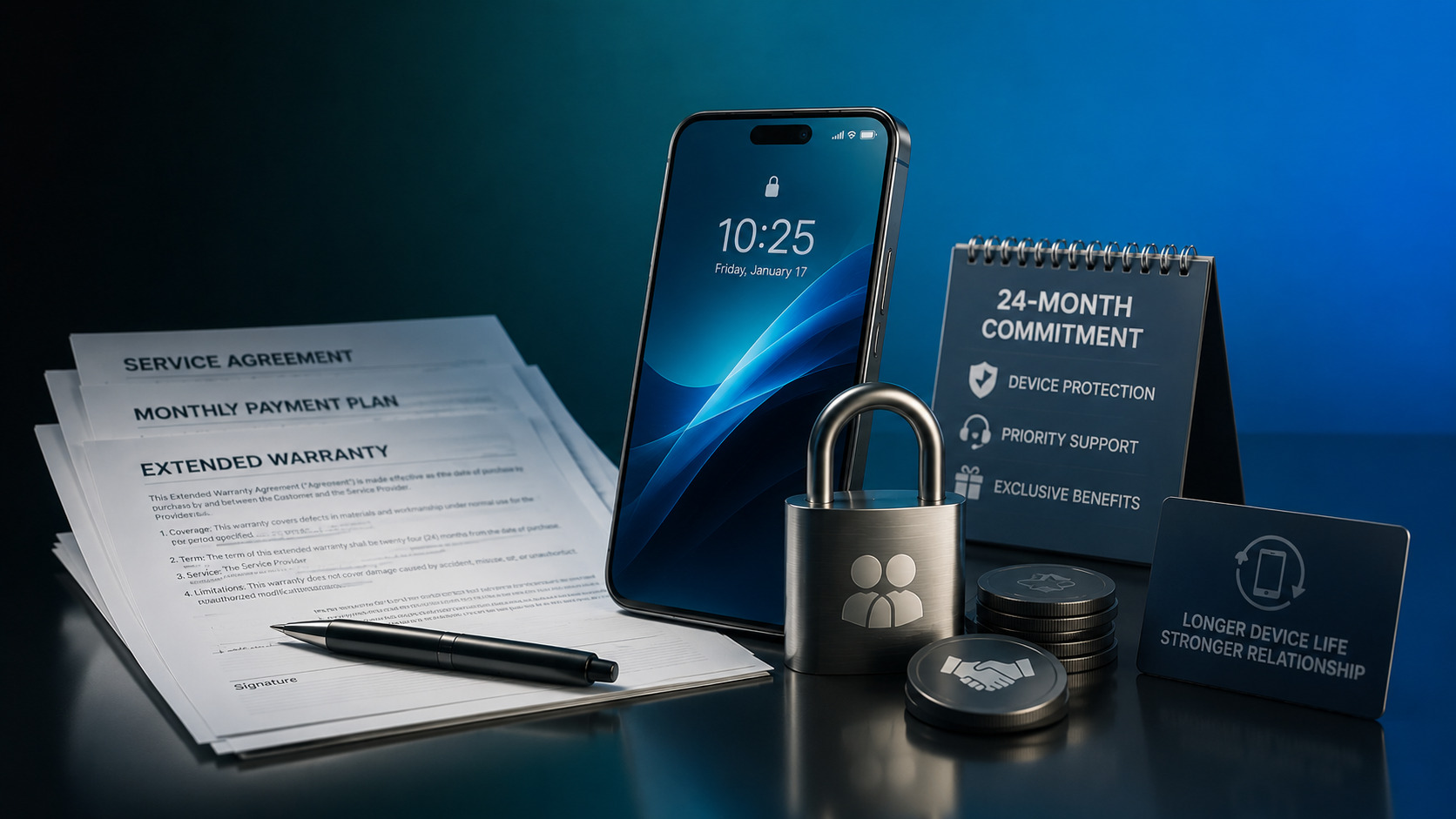
By spreading smartphone costs across monthly payments, carriers lower the initial barrier to obtaining premium devices. While this benefits many consumers, it also creates a longer-term relationship between the customer and the provider.
When a device remains under financing, switching carriers often becomes less convenient. This naturally encourages retention.
Carrier lock policies can also contribute to this strategy. Some providers restrict device usage until contractual obligations or financing requirements are fulfilled.
From the carrier’s perspective, these policies protect investments and reduce risk. From the consumer’s perspective, they can limit flexibility.
This does not necessarily mean such programs are negative. Many users appreciate predictable payments and access to premium devices. The key is understanding how these arrangements affect future choices.
A financed phone may offer immediate value while simultaneously reducing short-term freedom to switch networks.
Understanding how carrier programs affect device flexibility can help consumers make more informed long-term decisions.
What These Changes Mean for Consumers
For consumers, the expansion of carrier retention strategies 2026 brings both advantages and considerations.
On the positive side, users often receive better service and more rewards than in previous years. Loyalty programs increasingly provide benefits that once targeted only new customers.
Potential advantages include:
Reduced upgrade costs
Additional service perks
Simplified financing options
Better customer support experiences
However, consumers should also pay attention to how retention programs influence long-term flexibility.
For example, a highly attractive upgrade offer may involve new contractual commitments. A discounted device may carry restrictions that affect switching options later.
This does not mean users should avoid such programs. Instead, they should understand the terms and consider how future needs might change.
People relocate, travel internationally, switch jobs, and explore new providers. Maintaining flexibility often proves valuable over the lifespan of a device.
Balancing Convenience and Flexibility
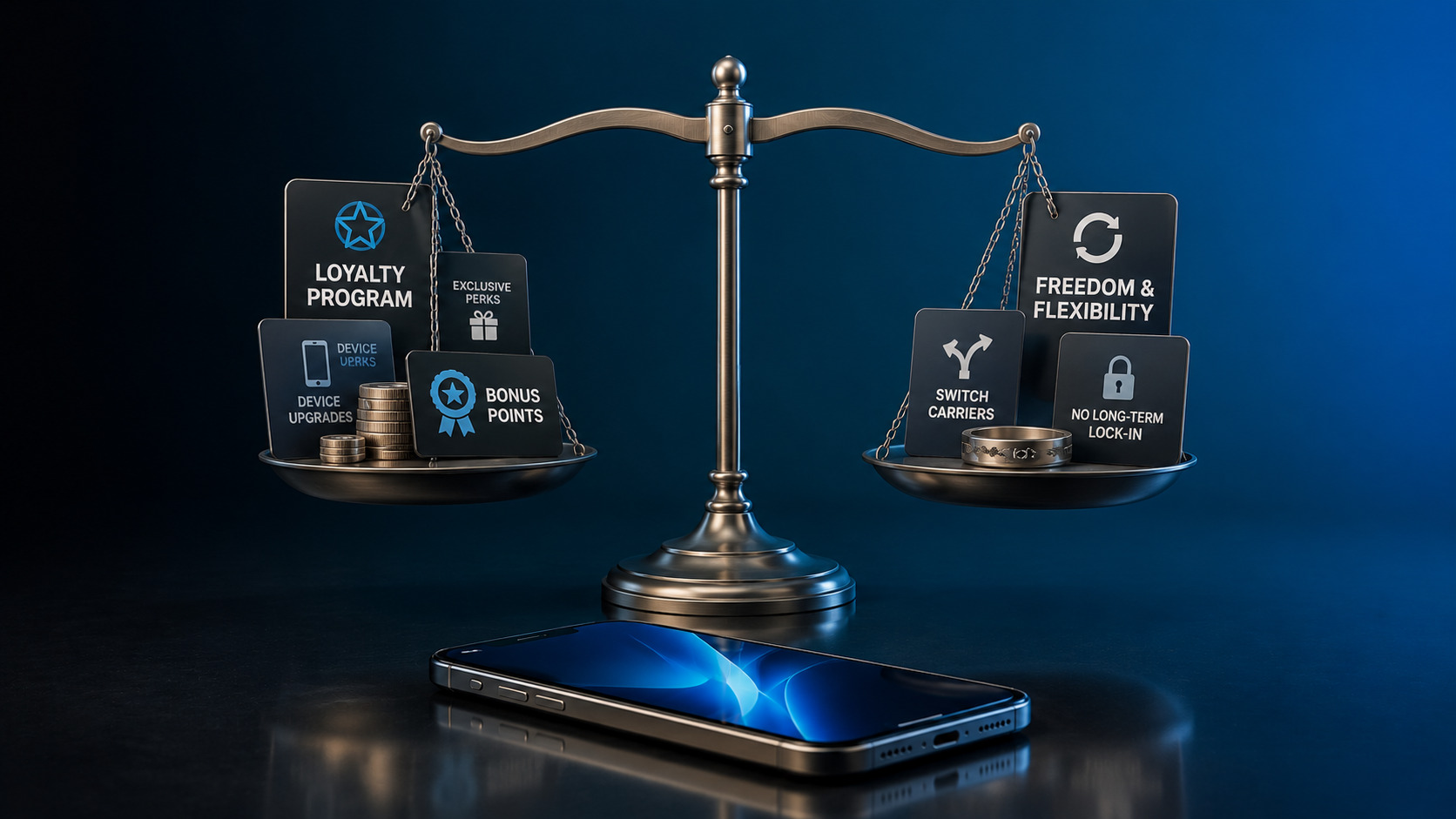
The most successful consumers approach carrier programs with a balanced perspective.
Convenience matters. Loyalty benefits, financing options, and bundled services can provide genuine value. For many users, these programs simplify device ownership and reduce upfront costs.
At the same time, flexibility remains important.
Before committing to a long-term arrangement, consider several questions:
How long do you expect to keep the device?
Do you frequently switch carriers?
Do you travel internationally?
Do you use eSIM or multiple SIM profiles?
Could your connectivity needs change in the future?
These questions help determine whether a retention-focused offer aligns with your lifestyle.
In many cases, the ideal solution combines the advantages of carrier programs with the ability to maintain future options.
As mobile market trends 2026 continue to evolve, consumers who understand both sides of the equation will be best positioned to make informed decisions.
The Future of Carrier Retention
Looking ahead, retention will likely remain a primary focus across the telecommunications industry.
Artificial intelligence, personalized offers, and advanced customer analytics will allow providers to tailor programs more precisely to individual users. Loyalty benefits may become increasingly customized based on usage patterns and customer preferences.
At the same time, regulatory attention and growing consumer awareness may encourage greater transparency around financing, lock policies, and service commitments.
This balance between retention and flexibility will shape the next generation of mobile services.
Consumers can expect carriers to continue investing in long-term relationships while competing to offer the most attractive combination of value, convenience, and customer experience.
Conclusion
The rise of carrier retention strategies 2026 reflects a changing mobile industry where keeping customers has become just as important as acquiring them. Loyalty programs, financing options, and upgrade incentives all play a role in this new approach.
For consumers, these developments create valuable opportunities, but they also make it important to understand how device ownership, financing, and network flexibility interact.
By evaluating both the benefits and the long-term implications of carrier programs, users can choose options that fit their needs today while preserving flexibility for the future.
UnlockBase.com helps users maintain control over their devices by supporting greater flexibility across networks and providers.
All products, and company names, logos, and service marks (collectively the "Trademarks") displayed are registered® and/or unregistered
trademarks™ of their respective owners.
The authors of this web site are not sponsored by or affiliated with any of the third-party trade mark or third-party registered trade mark owners,
and make no representations about them, their owners, their products or services.
MVNO growth 2026 is one of the most important mobile market trends shaping the first quarter of the year. As subscriber data from Q1 shows steady gains for smaller carriers, more users are reconsidering their relationship with traditional networks.
Mobile virtual network operators (MVNOs) are no longer niche alternatives. They now compete directly with major carriers on pricing, flexibility, and digital-first service models. This shift affects not only monthly bills but also device compatibility, unlocking decisions, and long-term phone flexibility.
Understanding why this movement is happening helps users make smarter choices in a more competitive market.
Why MVNO Growth 2026 Is Accelerating
Several forces drive MVNO growth 2026. The most visible factor is cost. Inflation pressure and changing consumer habits have pushed many users to evaluate their recurring expenses more critically.
MVNOs typically offer:
Lower monthly pricing
Flexible contract terms
Digital account management
Competitive data packages
Unlike major carriers, mobile virtual network operators do not own network infrastructure. Instead, they lease capacity from large carriers such as Verizon, AT&T, or T-Mobile. This model reduces overhead and allows them to offer more competitive rates.
In early 2026, subscriber reports indicate that budget-conscious users increasingly switch to these providers without sacrificing network quality. Because MVNOs operate on major networks, coverage often matches that of primary carriers.
As a result, switching to MVNO services has become less risky and more attractive.
Pricing Pressure on Major Carriers
Carrier competition 2026 has intensified as MVNO adoption grows. Major carriers face increasing pressure to justify premium pricing structures.
To respond, traditional networks have:
Introduced more segmented plan tiers
Expanded prepaid offerings
Bundled services with streaming or insurance
Despite these adjustments, many consumers still find MVNO plans simpler and more transparent. Budget mobile plans often eliminate long-term contracts and reduce hidden fees.
The pricing conversation now centers on value rather than brand loyalty. Users ask whether they truly need premium features or whether a leaner plan meets their daily needs.
This environment strengthens MVNO growth 2026 as users realize they can retain similar coverage at lower cost.
Device Compatibility Challenges
While pricing draws users toward MVNOs, device compatibility often determines whether the transition succeeds.
MVNOs rely on host networks, but activation processes can differ. Certain features—such as Wi-Fi calling, 5G access tiers, or eSIM activation—may depend on device configuration and network approval.
Users who switch without preparation may encounter issues such as:
SIM activation errors
Incomplete feature support
Delayed network registration
These challenges rarely stem from the MVNO itself. Instead, they often involve carrier locks or regional firmware restrictions on the device.
For example, a phone purchased through a major carrier may remain locked even after contract completion. In such cases, switching to MVNO services becomes more complicated than expected. If you’re considering switching to an MVNO, checking your phone’s unlock status can prevent activation issues.
Why Unlocked Phones Matter More in an MVNO Market
As MVNO growth 2026 continues, unlocked phones become increasingly valuable. Flexibility allows users to move between providers without replacing hardware.
An unlocked phone:
Accepts SIM or eSIM profiles from multiple networks
Simplifies testing new plans
Supports travel and international SIM use
Improves resale value
In contrast, locked devices may restrict activation to the original carrier, even if technically compatible with the MVNO’s host network.
This distinction matters more today than ever. Users exploring switching to MVNO services often experiment with short-term or trial plans. Without unlocking, that flexibility disappears.
Switching to MVNO: What Users Should Check
Before moving to a new provider, users should confirm several key details.
First, verify whether the phone is unlocked. Carrier-locked devices frequently block activation outside the original network.
Second, confirm band compatibility. While most modern smartphones support multiple frequency bands, older models may lack full support for specific networks.
Third, review eSIM capabilities if you plan to activate digitally. Some MVNOs rely heavily on eSIM provisioning, especially for online sign-ups.
By addressing these steps in advance, users avoid common frustrations associated with device configuration rather than carrier performance.
The Broader Impact of Carrier Competition 2026
The expansion of mobile virtual network operators signals more than temporary price fluctuations. It reflects structural change in how consumers approach connectivity.
In 2026, users prioritize:
Flexibility over long-term contracts
Transparent pricing over bundled extras
Device ownership over carrier dependency
These preferences align closely with unlocked device usage. The more competitive the market becomes, the more valuable device freedom becomes.
Major carriers still dominate infrastructure, but MVNOs reshape how consumers access that infrastructure. This dynamic drives MVNO growth 2026 and strengthens user leverage.
Long-Term Implications for Device Owners
As budget mobile plans gain momentum, long-term device strategy becomes important. Purchasing phones directly from manufacturers or ensuring carrier unlock eligibility protects flexibility.
Unlocked phones also maintain stronger resale value. Buyers prefer devices that work across multiple carriers, especially in markets where MVNO usage continues rising.
In a competitive landscape, flexibility becomes an asset rather than a luxury.
Conclusion: Flexibility Defines the 2026 Mobile Market
MVNO growth 2026 highlights a shift in consumer priorities. Smaller carriers attract subscribers through competitive pricing, digital convenience, and simplified plans. As users increasingly switch providers, device compatibility and unlock status become central to a smooth experience.
The mobile market in 2026 rewards flexibility. Users who prepare their devices gain the freedom to test new plans, reduce costs, and adapt quickly to changing offers. UnlockBase.com helps users move between major carriers and MVNOs by ensuring their devices remain flexible and network-ready. If you’re planning to switch providers, UnlockBase can help your phone stay compatible in a rapidly evolving market.
All products, and company names, logos, and service marks (collectively the "Trademarks") displayed are registered® and/or unregistered
trademarks™ of their respective owners.
The authors of this web site are not sponsored by or affiliated with any of the third-party trade mark or third-party registered trade mark owners,
and make no representations about them, their owners, their products or services.