
2026
Apple Expands eSIM-Only Strategy Globally in 2026: What It Means for Users
Apple
The Apple eSIM expansion 2026 marks a major shift in how smartphones connect to mobile networks worldwide. What began as a US-focused move toward eSIM-only iPhones is now extending into global markets, signaling a broader transformation in Apple’s long-term strategy.
For users, this change affects more than just SIM cards. It reshapes how devices are activated, how carriers operate, and how flexible a phone remains over time. As Apple pushes forward with its eSIM vision, understanding the implications becomes essential for anyone using or planning to buy an iPhone in 2026.
Apple’s eSIM Strategy Moves Beyond the US
Apple first introduced eSIM-only iPhones in the US market, removing the physical SIM tray entirely from certain models. At the time, this approach seemed region-specific. However, the Apple eSIM expansion 2026 confirms that this was only the beginning.
In 2026, Apple continues rolling out eSIM-only configurations in additional regions, particularly in markets with strong carrier infrastructure and digital onboarding capabilities. This shift reflects Apple’s broader vision: simplify hardware design while relying on software-driven connectivity.
The company’s Apple SIM strategy focuses on reducing physical dependencies. By eliminating SIM trays, Apple gains more internal space for components, improves water resistance, and aligns devices with digital-first usage patterns.
At the same time, this move places greater responsibility on carriers and users to adapt.
What’s Changing in Global Markets
The global rollout of eSIM-only iPhones introduces noticeable changes across different regions. While some markets adopt the transition smoothly, others require more adjustment.
In countries with mature digital infrastructure, eSIM activation already feels natural. Users can scan a QR code or download a carrier profile within minutes. These regions align closely with Apple’s vision.
In other markets, physical SIM cards still dominate. Retail-based activation, prepaid usage, and limited eSIM support create friction during the transition.
As a result, the eSIM adoption worldwide landscape remains uneven. Some countries move quickly toward eSIM-only models, while others continue supporting hybrid configurations.
This variation affects how users experience the eSIM only iPhone global rollout. The same device may feel seamless in one country and restrictive in another.
Impact on Carriers and Device Compatibility
The Apple eSIM expansion 2026 does not affect users alone—it also forces carriers to evolve.
Carriers must now support:
- Instant digital activation
- Remote profile management
- Multi-profile switching
- Improved customer support for eSIM onboarding
These requirements increase pressure on traditional systems that relied heavily on physical SIM distribution.
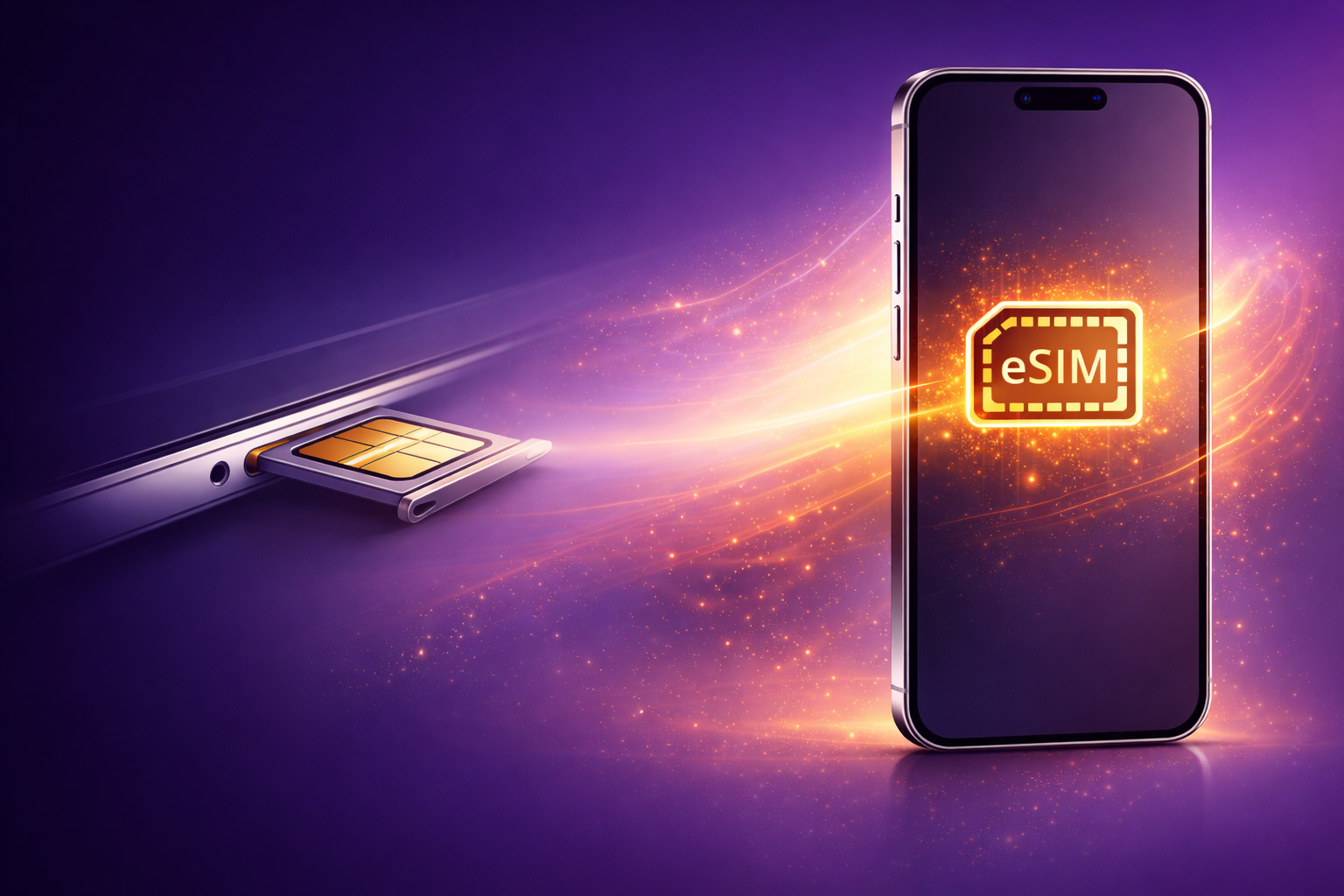
From a device perspective, compatibility becomes more complex. Even when a phone supports eSIM, factors such as carrier restrictions, regional firmware, and lock status can influence usability.
Carrier compatibility eSIM depends on several variables:
- Whether the device is unlocked
- Which carrier originally sold the phone
- Regional network configurations
- Supported frequency bands
As mobile network changes 2026 accelerate, these details become more important. Users who previously relied on physical SIM swapping must now ensure digital compatibility across networks.
What This Means for Consumers
For everyday users, the Apple eSIM expansion 2026 brings both advantages and new considerations.
On the positive side, eSIM simplifies many tasks. Users can activate plans without visiting stores, switch carriers more easily, and manage multiple profiles on a single device. Travel becomes more convenient, as local eSIM plans can be installed without replacing physical SIM cards.
However, flexibility depends heavily on device configuration. A locked device may still support eSIM but restrict activation to a single carrier. This limitation becomes more noticeable in an eSIM-only environment, where physical alternatives no longer exist.
Consumers should also consider long-term usability. As eSIM adoption grows, devices that remain flexible across networks retain more value and offer better resale potential.
As eSIM becomes more widely adopted, understanding your device’s flexibility across networks becomes increasingly important.
Practical Considerations Before Switching to eSIM-Only Devices
Before purchasing or switching to an eSIM-only iPhone, users should evaluate a few key factors.
First, confirm that local carriers fully support eSIM activation. Even in 2026, support levels vary by region and provider.
Second, check device lock status. Unlocking plays a central role in ensuring the phone works across multiple networks, especially when traveling or switching carriers.
Third, understand how many eSIM profiles the device can store and manage. Some users rely on multiple numbers for business, travel, or personal use.
These considerations help users adapt smoothly to the Apple SIM strategy without encountering unexpected limitations.
The Broader Impact of eSIM Adoption Worldwide
The expansion of eSIM-only devices signals a broader industry shift. Other manufacturers often follow Apple’s lead, meaning eSIM adoption will likely accelerate across the entire smartphone market.
This trend aligns with digital transformation across industries. Physical components gradually give way to software-managed systems, increasing efficiency but also requiring stronger infrastructure.
For users, the key takeaway is preparation. Understanding how Apple eSIM expansion 2026 fits into this larger trend helps avoid compatibility issues and ensures long-term flexibility.
Unlocking and Flexibility in an eSIM-First World
In a world without physical SIM cards, unlocking becomes even more important. Without the ability to insert a different SIM, users rely entirely on digital profile compatibility.
Unlocked devices allow:
- Activation across multiple carriers
- Seamless switching between networks
- Access to international eSIM plans
- Higher resale value
As eSIM becomes standard, unlocking shifts from a convenience feature to a core requirement for device freedom.
Conclusion: A Digital Shift That Redefines Connectivity
The Apple eSIM expansion 2026 represents more than a technical update. It marks a structural change in how mobile connectivity works worldwide.
While the transition offers clear benefits in convenience and efficiency, it also introduces new dependencies on carrier support and device configuration. Users who understand these dynamics gain the most from Apple’s evolving ecosystem.
As eSIM-only devices become more common, flexibility, compatibility, and preparation define the user experience.
UnlockBase.com helps users adapt to evolving network standards by ensuring devices remain compatible across different carriers and regions.
All products, and company names, logos, and service marks (collectively the "Trademarks") displayed are registered® and/or unregistered trademarks™ of their respective owners. The authors of this web site are not sponsored by or affiliated with any of the third-party trade mark or third-party registered trade mark owners, and make no representations about them, their owners, their products or services.


Comments are closed.