
2026
AI Smartphones in 2026: How On-Device Intelligence Is Reshaping the Mobile Industry
AI
The biggest innovation in smartphones is no longer just faster processors, brighter displays, or higher-resolution cameras. In AI smartphones 2026, artificial intelligence has become one of the defining features that influences almost every aspect of the mobile experience.
Unlike earlier generations, where AI mostly enhanced cloud-based services, today’s flagship devices increasingly rely on powerful on-device processing. This allows smartphones to perform complex tasks directly on the phone without constantly sending data to remote servers.
From smarter photography and live translation to battery optimization and productivity tools, AI is quietly transforming how people interact with their devices every day. As manufacturers continue investing heavily in artificial intelligence, smartphones are becoming more personalized, efficient, and capable than ever before.
Why AI Has Become the Biggest Smartphone Trend of 2026
Artificial intelligence has evolved from a marketing buzzword into one of the primary areas of competition among smartphone manufacturers.
Companies such as Apple, Samsung, Google, HONOR, Xiaomi, and others now place AI capabilities at the center of product launches. Instead of focusing solely on hardware improvements, manufacturers increasingly highlight intelligent software experiences that improve how devices work in real-world situations.
Several factors explain this shift.
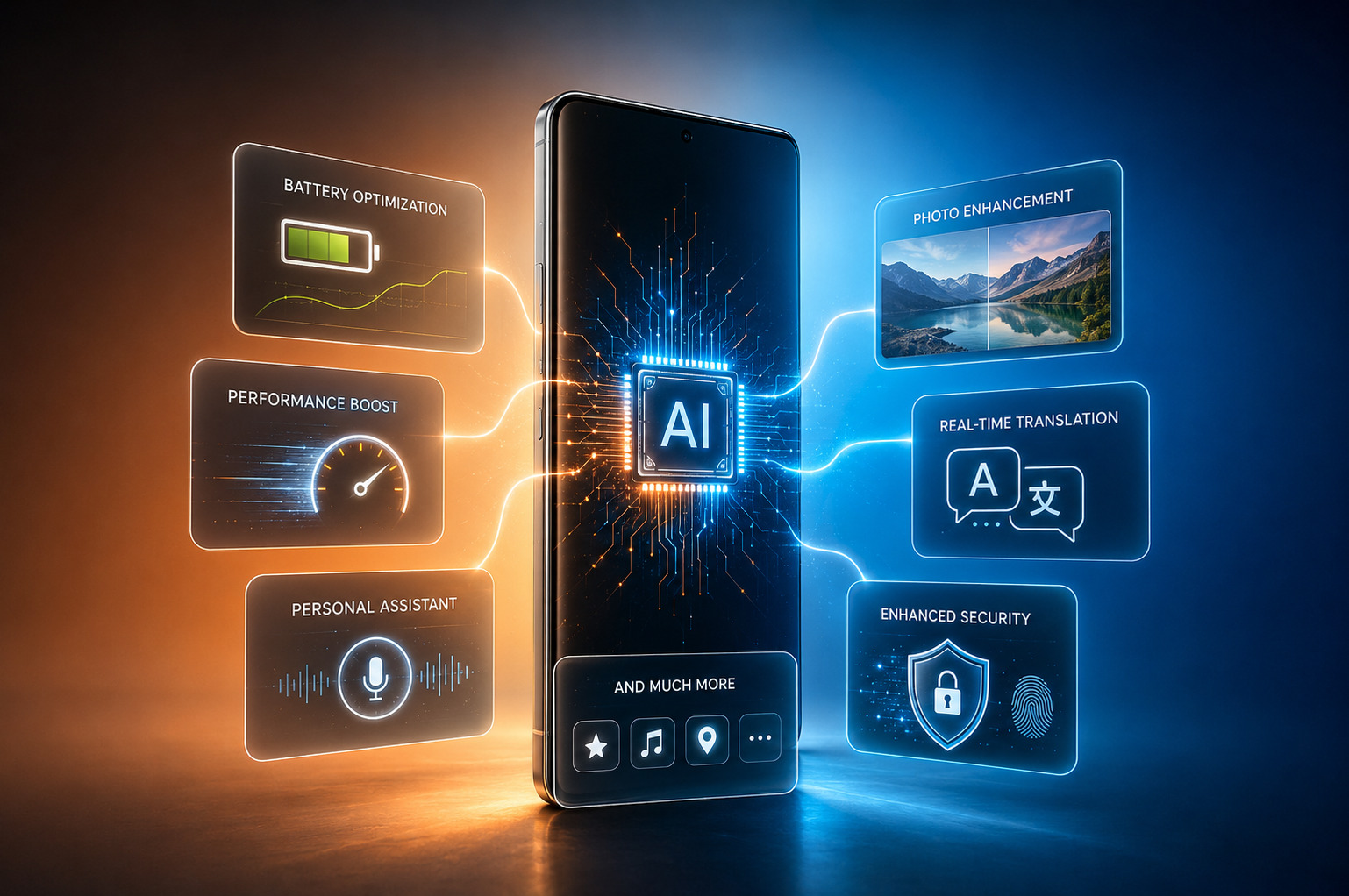
Modern chipsets now include dedicated neural processing units (NPUs) designed specifically for AI workloads. These specialized processors allow smartphones to perform machine-learning tasks far more efficiently than traditional CPUs.
At the same time, advances in mobile operating systems have made AI easier to integrate throughout the user experience.
Consumers also expect more from their devices. Rather than simply opening applications, users increasingly want phones that anticipate needs, automate repetitive tasks, and provide helpful suggestions throughout the day.
These developments have made AI smartphones 2026 one of the defining trends in the mobile industry.
What On-Device AI Actually Means
One of the most significant changes in recent years is the growing adoption of on-device AI.
Instead of relying entirely on cloud computing, many AI functions now run directly on the smartphone itself.
This approach offers several advantages.
First, responses are significantly faster because information no longer needs to travel to remote servers before processing.
Second, privacy improves. Sensitive information such as voice recordings, photos, and personal documents can often remain on the device instead of being uploaded to external systems.
Third, on-device processing allows many intelligent features to continue working even when internet connectivity is limited or unavailable.
Examples of on-device AI include:
- Voice recognition
- Real-time image enhancement
- Smart text suggestions
- Offline language translation
- Adaptive battery management
- Intelligent notification filtering
Rather than functioning as one standalone feature, AI increasingly works quietly in the background to improve the overall smartphone experience.
How Major Smartphone Manufacturers Are Using AI
Although every manufacturer approaches artificial intelligence differently, several common themes have emerged across the industry.
Photography & Image Processing
Photography remains one of the most visible examples of smartphone AI features.
Modern cameras do far more than capture images.
Artificial intelligence now helps optimize exposure, reduce noise, improve dynamic range, sharpen details, and enhance low-light performance automatically.
Portrait mode continues to improve through more accurate subject detection, while AI-powered editing tools make removing unwanted objects or adjusting backgrounds much easier than before.
Some smartphones even suggest the best frame before a photo is taken, helping users achieve better results with minimal effort.
Rather than replacing traditional camera hardware, AI complements it by maximizing the quality that sensors can deliver.
Productivity & Personal Assistance
Artificial intelligence is also reshaping productivity.
Many flagship devices now include intelligent writing assistance capable of summarizing emails, rewriting messages, correcting grammar, and generating content suggestions.
Meeting transcription, note organization, and document summarization have become increasingly common.
Digital assistants are evolving as well.
Instead of responding only to simple voice commands, modern assistants understand more complex requests, maintain conversational context, and perform multiple tasks simultaneously.
For professionals and students alike, these improvements save time while reducing repetitive work.
Battery Optimization
Battery life has always been one of the most important aspects of smartphone ownership.
AI now plays a significant role in improving power efficiency.
By learning user habits, smartphones can identify which applications deserve priority and which processes can be limited without affecting everyday performance.
Examples include:
- Predicting charging routines
- Reducing background activity
- Optimizing processor performance
- Managing screen brightness intelligently
- Allocating power based on usage patterns
These improvements often translate into noticeably longer battery life without requiring larger batteries.
Security & Privacy
Artificial intelligence is becoming increasingly important for mobile security.
Many devices now use AI to identify unusual activity, detect phishing attempts, and strengthen authentication systems.
Facial recognition has become faster and more accurate through advanced machine-learning algorithms.
Spam filtering has improved dramatically, helping users avoid fraudulent calls, suspicious messages, and malicious links.
Because many security features operate directly on the device, sensitive information can often remain private while still benefiting from intelligent protection.
As artificial intelligence smartphones continue evolving, security will likely become one of AI’s most valuable contributions.
Language Translation & Accessibility
Perhaps one of the most practical applications of AI involves communication.
Real-time language translation continues improving rapidly, allowing users to translate conversations, text messages, websites, and documents with remarkable speed.
Many devices now provide live subtitles during video calls and automatically generate captions for multimedia content.
Accessibility features have also become significantly more capable.
AI helps users by:
- Reading text aloud
- Describing images
- Improving speech recognition
- Enhancing hearing assistance
- Simplifying user interfaces when needed
These innovations make smartphones more useful for a wider range of users than ever before.
What This Means for Mobile Users
For consumers, the rise of AI smartphones 2026 brings benefits that extend far beyond impressive demonstrations during product launches.
Many AI improvements work quietly in the background, making devices feel faster, more efficient, and easier to use without requiring additional effort from the user.
Photography becomes more reliable. Battery life lasts longer. Translation becomes more natural. Productivity tasks require fewer manual steps.
Perhaps most importantly, smartphones become increasingly personalized.
Instead of every device behaving identically, AI allows phones to adapt to individual habits and preferences over time.
As these intelligent capabilities continue expanding through software updates, keeping a device current and compatible becomes increasingly valuable.
As smartphones become increasingly intelligent through software updates, keeping your device flexible across carriers and regions helps ensure you can take full advantage of future innovations.
What’s Next for AI-Powered Smartphones?
The rapid pace of AI development suggests that today’s features represent only the beginning.
Future smartphones are expected to deliver even deeper integration between hardware, software, and artificial intelligence.
Areas likely to see continued innovation include:
- More capable personal assistants
- Advanced offline AI models
- Smarter health and wellness monitoring
- Predictive automation
- Improved augmented reality experiences
- Enhanced collaboration between smartphones, tablets, wearables, and computers
Manufacturers are also expected to continue refining on-device processing to reduce dependence on cloud services while improving privacy and responsiveness.
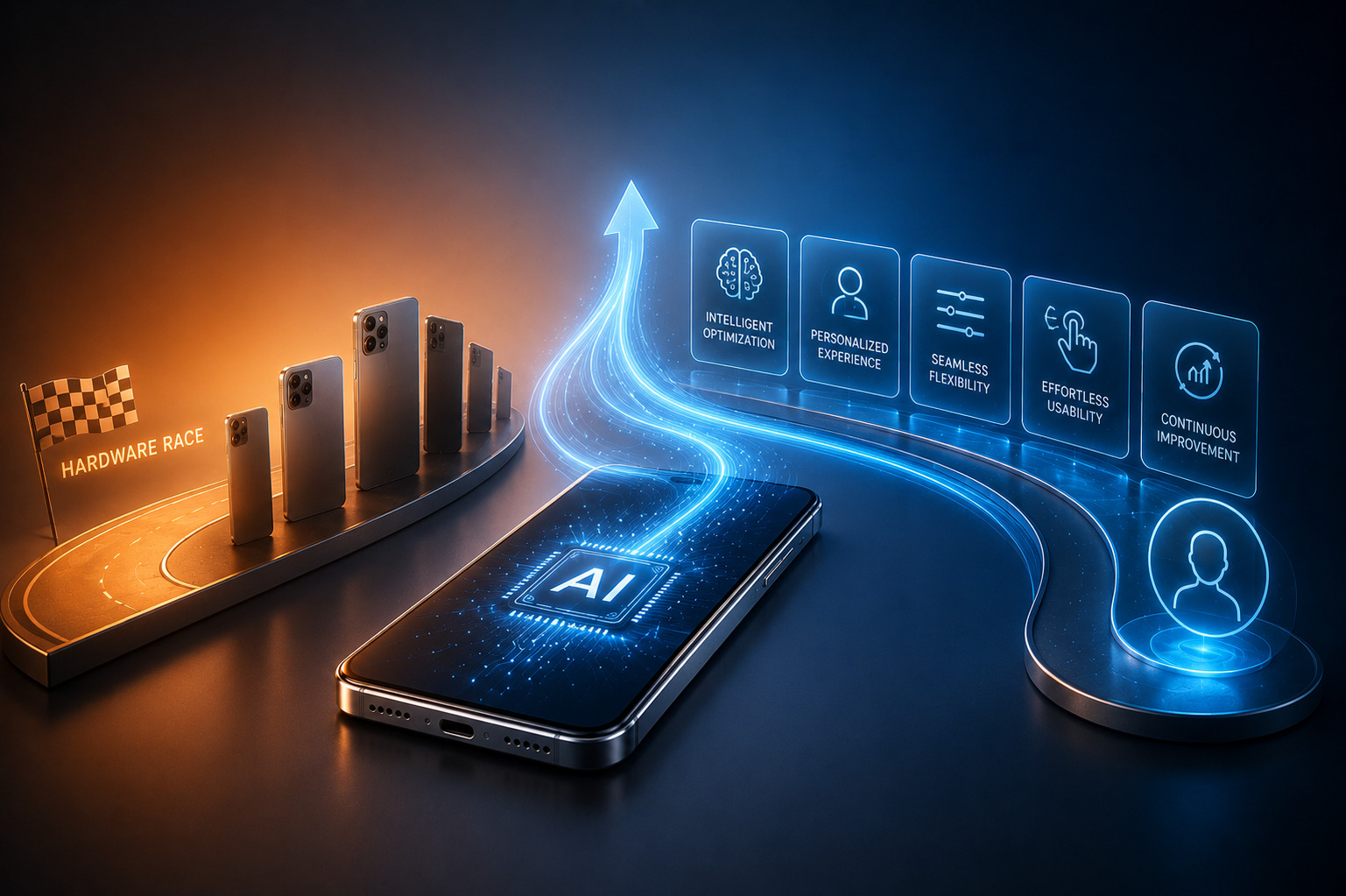
As mobile technology trends 2026 continue evolving, software intelligence may become an even greater differentiator than raw hardware specifications.
Consumers will likely evaluate future devices not only by processor speed or camera resolution but also by how intelligently the phone assists with everyday life.
Long-Term Considerations for AI Smartphones
Artificial intelligence also changes how consumers should think about long-term device ownership.
Because many AI capabilities arrive through software updates, maintaining a compatible, flexible device becomes increasingly important.
Factors worth considering include:
- Software support commitments
- Processor capability for future AI features
- Regional feature availability
- Carrier compatibility
- eSIM support
- Long-term network flexibility
A smartphone purchased today may gain entirely new capabilities through future updates, making long-term usability more valuable than ever.
For this reason, flexibility is becoming an essential part of the ownership experience.
Conclusion
The rise of AI smartphones 2026 represents one of the most significant changes the mobile industry has experienced in years. Artificial intelligence is no longer limited to isolated features—it now enhances photography, productivity, battery management, security, accessibility, and countless everyday interactions.
As manufacturers continue investing in powerful on-device AI, smartphones will become increasingly capable of understanding user behavior, simplifying complex tasks, and delivering more personalized experiences.
For consumers, this means choosing a smartphone is no longer just about hardware specifications. Long-term software support, intelligent features, and device flexibility will play an increasingly important role in overall value.
UnlockBase.com helps users get the most from modern smartphones by supporting long-term flexibility across networks, countries, and future device upgrades.
All products, and company names, logos, and service marks (collectively the "Trademarks") displayed are registered® and/or unregistered trademarks™ of their respective owners. The authors of this web site are not sponsored by or affiliated with any of the third-party trade mark or third-party registered trade mark owners, and make no representations about them, their owners, their products or services.


Comments are closed.