
2026
Using One Phone Across Multiple Carriers in 2026: Real-World Multi-SIM Use Cases
eSim
In 2026, the idea of carrying two phones feels increasingly outdated. Thanks to advances in dual SIM hardware and eSIM technology, a multi SIM unlocked phone now allows users to combine multiple carriers on a single device with minimal friction.
What makes this setup truly work, however, is not the number of SIM slots—it is the absence of carrier restrictions. Unlocked phones enable flexible, real-world multi-SIM use cases that locked devices often complicate or block entirely. This article explores why multi-SIM usage is growing and how unlocked phones make it practical in everyday scenarios.
Why Multi-SIM Use Is Growing
Multi-SIM functionality is no longer a niche feature for power users. It has become a mainstream solution driven by changes in how people work, travel, and manage connectivity.
Several trends explain this growth. Remote work and hybrid schedules blur the line between personal and professional communication. International travel has rebounded strongly, while roaming costs remain unpredictable. At the same time, eSIM support has become standard on most modern smartphones.
As a result, users increasingly expect one device to handle multiple roles. A multi SIM unlocked phone supports this expectation by allowing different carriers to coexist without artificial limitations.
Case Study: Domestic + International SIM Use
One of the most common real-world examples of multi-SIM usage involves combining a domestic carrier with an international travel SIM.
Consider a US-based user who travels frequently to Europe or Asia. Instead of paying high roaming fees, they install a local eSIM for data while keeping their primary US number active for calls and authentication messages.
In this scenario, an unlocked phone enables seamless switching. The user can choose which SIM handles data and which handles voice, often directly from system settings. Incoming calls continue uninterrupted, while data routes through the most cost-effective option.
By contrast, locked devices may block foreign eSIM activation entirely or restrict profile switching. This limitation defeats the purpose of multi-SIM hardware and creates unnecessary friction during travel.
This use case highlights how travel SIM setup works best when devices are free from carrier-imposed boundaries.
Case Study: Business and Personal Numbers
Another increasingly common use case involves separating business and personal communication without carrying two phones.
Many professionals now maintain a dedicated business number for clients, messaging apps, or verification purposes. With a dual SIM phone use setup, one SIM handles personal communication while the other manages business calls and messages.
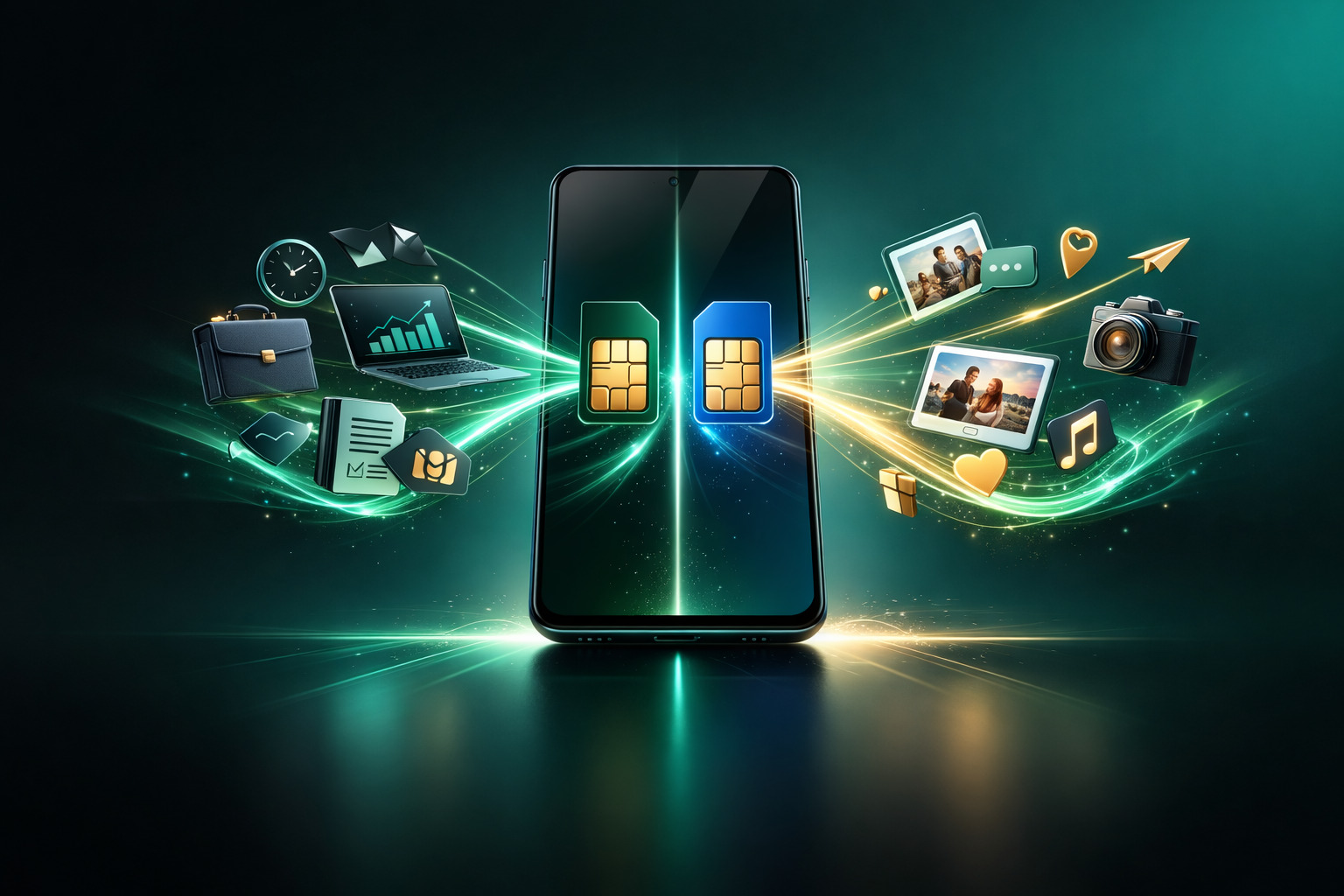
Unlocked phones make this arrangement reliable. Users can assign default SIMs for specific contacts, apps, or data usage. Notifications remain distinct, and switching contexts becomes intuitive rather than disruptive.
Locked phones, however, often introduce constraints. Some carriers restrict secondary SIM activation or limit eSIM profiles to their own network. These restrictions undermine the convenience that multi-SIM hardware promises.
In practice, unlocked phone flexibility determines whether this setup feels seamless or frustrating.
Locked vs Unlocked in Multi-SIM Scenarios
The difference between locked and unlocked devices becomes most visible in multi-SIM environments.
A locked phone may technically support two SIMs, but functionality often remains tied to the original carrier. Users may encounter blocked eSIM activations, disabled network selection, or restrictions on which SIM can handle data.
Unlocked phones remove these obstacles. They allow full control over carrier selection, profile switching, and SIM prioritization. This freedom is essential for eSIM multi carrier setups that rely on dynamic network choices.
In multi-SIM scenarios, unlocking is not about bypassing features—it is about enabling them to work as designed.
Multi-SIM setups work best when devices are free from carrier restrictions that limit profile switching.
Practical Takeaways for Users
Multi-SIM functionality offers real benefits, but results depend on preparation and device status. Users considering a multi SIM unlocked phone setup should keep several practical points in mind.
First, confirm how many SIM profiles the device supports simultaneously. Some phones allow two active lines, while others store multiple profiles but activate only one at a time.
Second, verify carrier compatibility for each intended SIM. Even unlocked phones must support the necessary frequency bands and technologies.
Third, check lock status early. Many issues attributed to “eSIM problems” or “SIM errors” stem from lingering carrier restrictions rather than hardware limitations.
Finally, think long-term. A flexible device supports future travel, carrier changes, and evolving work needs without requiring replacement.
Why Multi-SIM Matters in 2026 and Beyond
As mobile networks move toward eSIM-first models, multi-SIM usage will continue to grow. Carriers increasingly design plans around digital provisioning, making it easier to add or remove lines dynamically.
In this environment, unlocked phones serve as the foundation for adaptability. They allow users to take advantage of competitive plans, regional options, and new services without being locked into a single ecosystem.
The multi SIM unlocked phone is not a luxury feature—it is becoming a practical necessity for users who value control over their connectivity.

Conclusion: One Device, Real Flexibility
Using one phone across multiple carriers is no longer an edge case. In 2026, it reflects how people actually live and work. Whether managing travel connectivity, separating business and personal communication, or simply optimizing costs, multi-SIM setups deliver tangible benefits.
Those benefits depend on device freedom. Without unlocking, multi-SIM features remain limited or inconsistent. With it, they work as intended.
UnlockBase.com helps users enable multi-SIM flexibility by providing unlocking solutions compatible with modern eSIM and dual-SIM devices. If you want your phone to work seamlessly across multiple carriers, UnlockBase is ready to support long-term compatibility and control.
All products, and company names, logos, and service marks (collectively the "Trademarks") displayed are registered® and/or unregistered trademarks™ of their respective owners. The authors of this web site are not sponsored by or affiliated with any of the third-party trade mark or third-party registered trade mark owners, and make no representations about them, their owners, their products or services.


Comments are closed.